Hydroponics vs Soil Gardening: A Clean Comparison
Gardening is joyful, relaxing, and deeply satisfying. However, choosing the best growing method can feel confusing at first. In this guide to Hydroponics vs Soil Gardening, we explore Hydroponics vs Soil Gardening in a simple and friendly way. This Hydroponics vs Soil Gardening comparison will help you understand the real differences without overwhelming details. Whether you are new to gardening or simply curious, Hydroponics vs Soil Gardening can be easier to understand when explained with everyday examples.
Both methods grow healthy plants successfully. Yet, they differ greatly in cleanliness, effort, cost, and results. Hydroponics offers a modern, soil-free approach, while soil gardening follows a more traditional path. Each has unique strengths depending on your lifestyle and goals. Let us dig in, without getting our hands too
Understanding the Basics of Both Gardening Methods
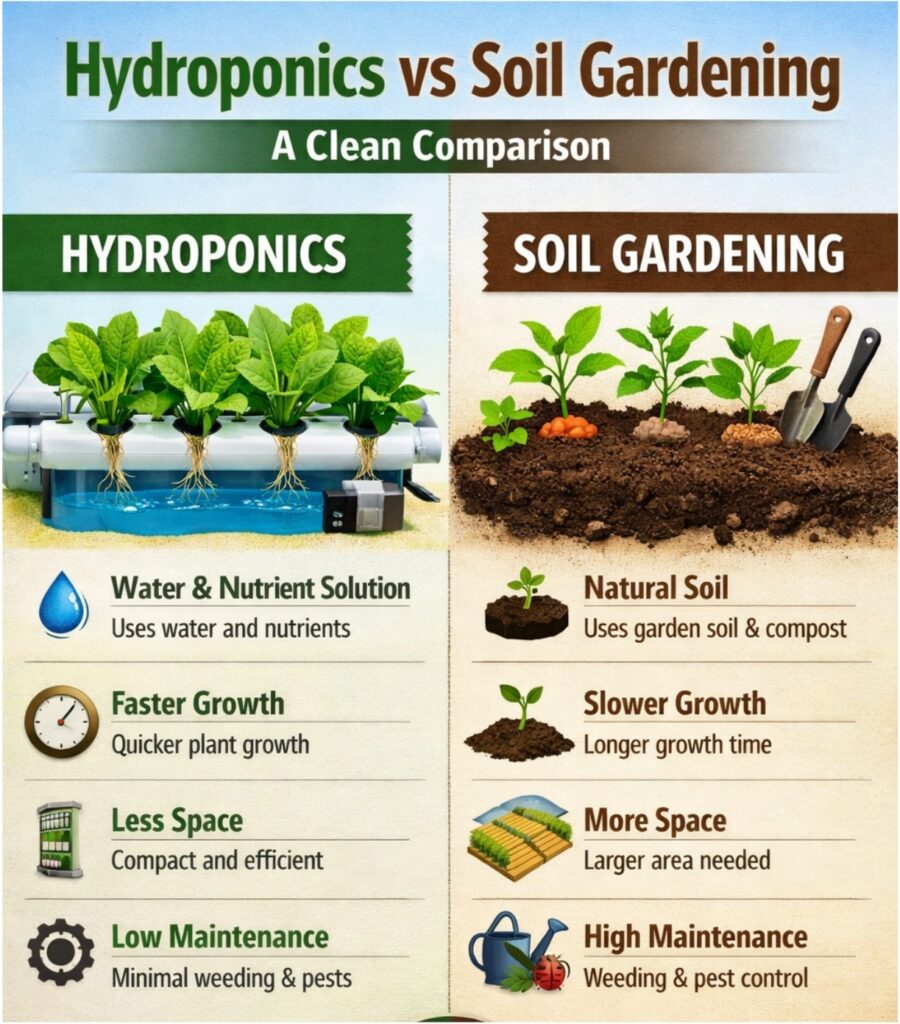
Soil gardening is the traditional method most people know best. Plants grow in soil, absorbing nutrients and water from the ground. This approach depends heavily on soil quality, weather conditions, and available space. For many gardeners, it feels natural, familiar, and deeply connected to traditional farming.
Hydroponics works in a completely different way. Instead of soil, plants grow in nutrient-rich water solutions. Their roots are supported by water, air, or an inert growing medium such as coco coir or clay pellets. Nutrients are delivered directly to the roots, allowing plants to access exactly what they need more efficiently.
In Hydroponics vs Soil Gardening: A Clean Comparison, this is where the biggest difference begins. Soil can be messy, unpredictable, and sometimes filled with weeds, pests, or soil-borne diseases. Hydroponic systems offer a cleaner, more controlled environment that can reduce many of these challenges.
This level of control transforms the gardening experience. Soil gardening often requires digging, weeding, and frequent monitoring of soil health. Hydroponics replaces much of that physical labor with system management, such as checking water quality, nutrient levels, and pH balance. Both methods require attention and care, but the daily tasks feel very different.
Cleanliness and Pest Control Compared
Cleanliness plays a bigger role in gardening than many people expect. Soil can contain insects, worms, weeds, and harmful bacteria. Even healthy soil may introduce unexpected pests or plant diseases. Because of this, traditional soil gardening can sometimes feel messy and harder to control.
Hydroponics offers a much cleaner growing environment. Since there is no soil, there are fewer places for pests and diseases to hide. This greatly reduces the risk of soil-borne problems and often lowers the need for pesticides. Fewer pests mean healthier plants and less chemical exposure, which is a major advantage for many growers.
In Hydroponics vs Soil Gardening: A Clean Comparison, hydroponics clearly stands out for cleanliness. Your hands stay cleaner, your plants remain more protected, and your growing area often feels more organized.
Soil gardens frequently require insect control methods, including sprays or treatments, to manage pests. Hydroponic systems usually need fewer chemical interventions because the controlled environment limits many common garden threats. This can lead to cleaner produce and greater confidence in what reaches your plate.
Clean growing also means less odor and less waste. Hydroponic systems work especially well in homes, apartments, balconies, and other compact spaces because they create a tidy setup with minimal mess. Soil gardens, on the other hand, may produce odors after rain, composting, or fertilizer use, which can be less appealing for some gardeners.
For growers who value cleanliness, convenience, and pest control, hydroponics offers a modern solution that feels cleaner from planting to harvest.
Water Use and Environmental Impact
Water efficiency is one of the most important differences between hydroponics and soil gardening. Traditional soil gardens often lose large amounts of water through evaporation, runoff, and uneven absorption. In many cases, much of the water never reaches plant roots, which can increase costs and waste valuable resources.
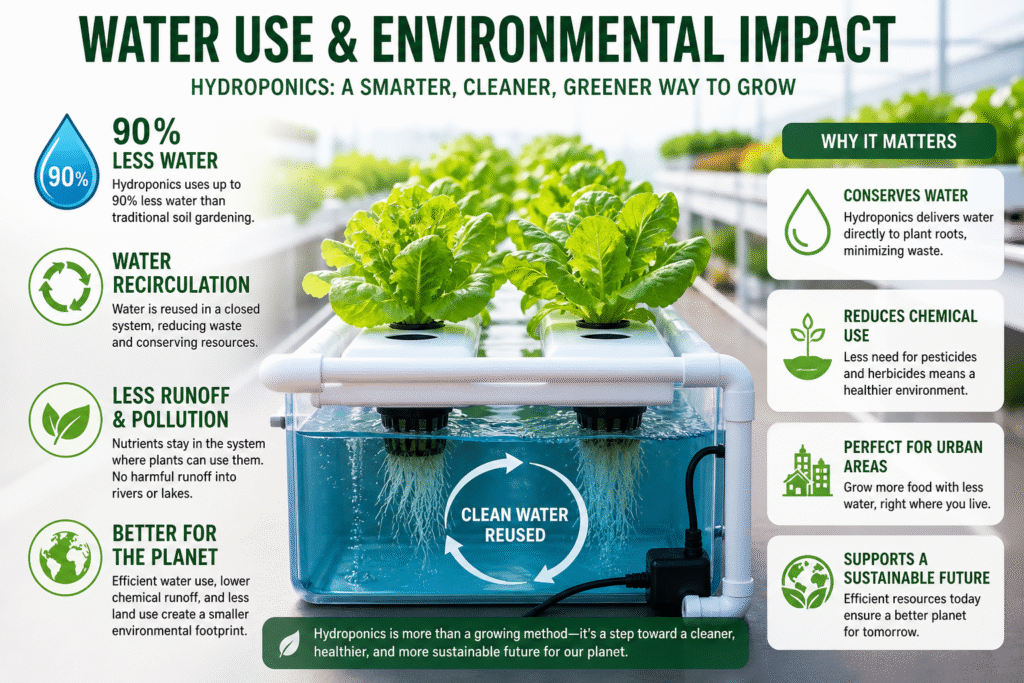
Hydroponics is designed to use water more efficiently. Most systems recycle and recirculate water, allowing plants to absorb exactly what they need while minimizing waste. Because the water stays within a controlled system, very little is lost compared to conventional soil gardening.
In Hydroponics vs Soil Gardening: A Clean Comparison, water conservation is one of hydroponics’ strongest advantages. Many hydroponic systems can use up to 90% less water than soil gardens. This makes hydroponics especially valuable in dry climates, urban areas, and regions where water conservation is essential.
Soil gardening often depends heavily on rainfall, seasonal weather, and climate conditions. Droughts, heavy rain, or changing weather patterns can disrupt plant growth and damage crops. Hydroponics removes much of this uncertainty by creating a stable growing environment that supports year-round cultivation regardless of outdoor weather.
Lower water use also reduces environmental impact. In soil gardening, fertilizers and chemicals can wash into rivers, lakes, or groundwater through runoff. Hydroponic systems keep nutrients contained within the system, reducing pollution and limiting environmental contamination.
For gardeners focused on sustainability, hydroponics offers a cleaner and more resource-efficient solution. By conserving water, reducing runoff, and supporting controlled growth, hydroponics can play an important role in environmentally responsible food production.
Yield, Growth Speed, and Maintenance
Fast results are exciting for any gardener, but growth speed can vary greatly depending on the method you choose. Soil gardening often requires patience because plants grow at a more natural pace. Growth depends on factors like soil quality, weather conditions, seasonal changes, and proper nutrient availability. While this traditional approach can be rewarding, it may take longer to reach harvest time.
Hydroponics often delivers faster growth because nutrients are sent directly to plant roots in a highly efficient way. Plants do not need to spend extra energy searching through soil for water and nutrients. Instead, they can focus more on growth and production. This direct nutrient delivery often leads to quicker development, faster harvests, and increased productivity.
In Hydroponics vs Soil Gardening: A Clean Comparison, hydroponics frequently stands out for speed and yield. Many hydroponic systems produce more crops in less space, making them especially useful for apartments, balconies, and small homes. Vertical systems and compact designs help maximize every inch of available growing space.
Maintenance is another major difference between these two gardening methods. Soil gardening often requires regular weeding, digging, mulching, and pest management. Weeds can compete with plants for nutrients, and outdoor gardens may need ongoing physical labor to stay productive.
Hydroponics completely eliminates weeds because there is no soil involved. Gardeners do not need to dig or pull unwanted plants, which creates a cleaner and more organized growing experience.
However, hydroponics does require system monitoring. Growers must check water levels, nutrient balance, and pH levels to keep plants healthy. While this may sound technical at first, many modern hydroponic systems are beginner-friendly and become easier to manage with practice.
Soil gardening may feel simpler for beginners because it relies on familiar, natural processes. Still, long-term maintenance can become physically demanding depending on garden size and conditions.
Both methods reward consistency and care. Soil gardening offers tradition and simplicity, while hydroponics provides speed, productivity, and greater environmental control. The best choice depends on whether you value natural methods or cleaner, high-efficiency growing.