Hydroponics vs Soil Gardening: A Clean Comparison
Hydroponics vs soil gardening is a popular topic for anyone interested in growing food at home. Many beginners want to understand the differences between these two methods before choosing the right one.
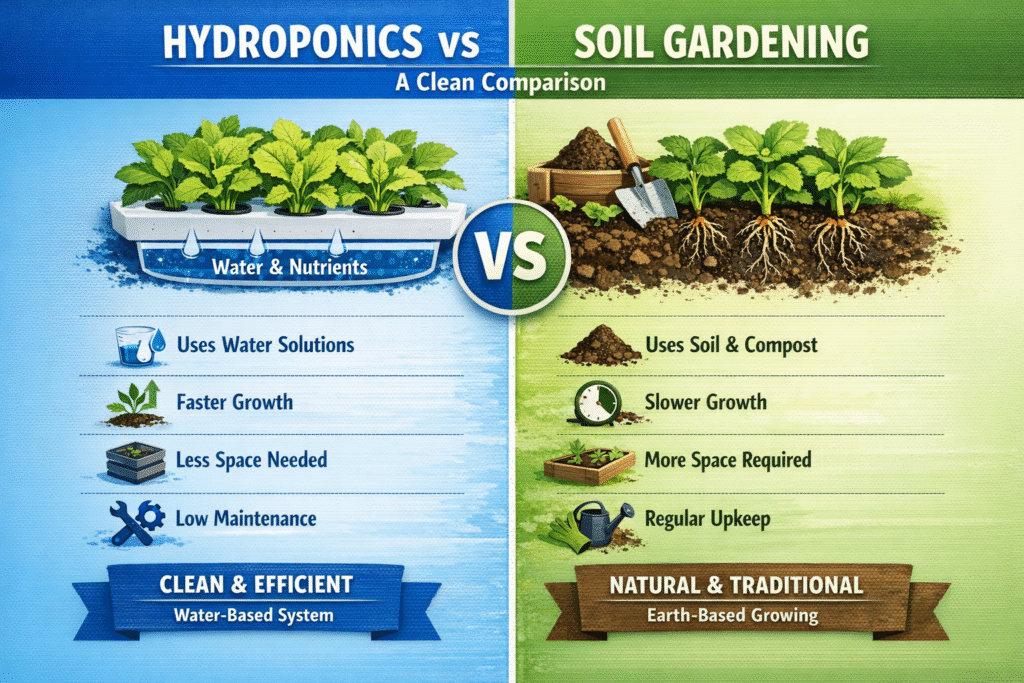
When comparing hydroponics vs soil gardening, cleanliness is one of the biggest advantages. Hydroponics uses water and nutrients without soil, making it a cleaner and more controlled growing method.
Another key point in hydroponics vs soil gardening is efficiency. Hydroponic systems often grow plants faster, while soil gardening depends more on natural conditions and space.
Think of this as a chat between gardening friends, not a science lecture. Both methods grow plants successfully. Yet, they differ greatly in cleanliness, effort, and results.
Let us dig in, without getting our hands too dirty.
Understanding the Basics of Both Gardening Methods
Soil gardening is the traditional way most people know. Plants grow in soil, drawing nutrients and water from the ground. This method depends heavily on soil quality, weather, and space.
It feels natural and familiar to many gardeners.
Hydroponics works very differently. Plants grow without soil, using nutrient-rich water instead.
Roots sit in water, air, or an inert growing medium. Nutrients go straight to the roots, not through soil.
In Hydroponics vs Soil Gardening: A Clean Comparison, the biggest difference starts right here.
Soil can be messy, unpredictable, and sometimes full of pests. Hydroponic systems stay cleaner and more controlled. This control changes the entire gardening experience.
Soil gardening needs digging, weeding, and constant checking. Hydroponics replaces digging with monitoring water and nutrients. Both need care, but the type of work feels very different.
Cleanliness and Pest Control Compared
Cleanliness matters more than many gardeners realize. Soil often hides insects, worms, and harmful bacteria. Even healthy soil can bring unexpected plant problems. This makes soil gardening feel messy at times.
Hydroponics shines in cleanliness. There is no soil to carry pests or diseases.
Fewer pests mean fewer pesticides. That is a big win for health and peace of mind.
In Hydroponics vs Soil Gardening: A Clean Comparison, hydroponics stands out as the cleaner option. Since there’s no soil involved, your hands remain tidy, while your plants are less exposed to dirt and contaminants. As a result, the entire growing area feels more organized and easier to maintain.
Soil gardens often need chemical sprays to fight insects. Hydroponic systems usually avoid these chemicals. This leads to cleaner produce on your plate. You know exactly what touched your food.
Clean growing also means less odor and less waste. Hydroponics fits well in homes, balconies, and small spaces. Soil gardens can smell after rain or fertilizer use. This matters, especially for indoor gardeners.
Water Use and Environmental Impact
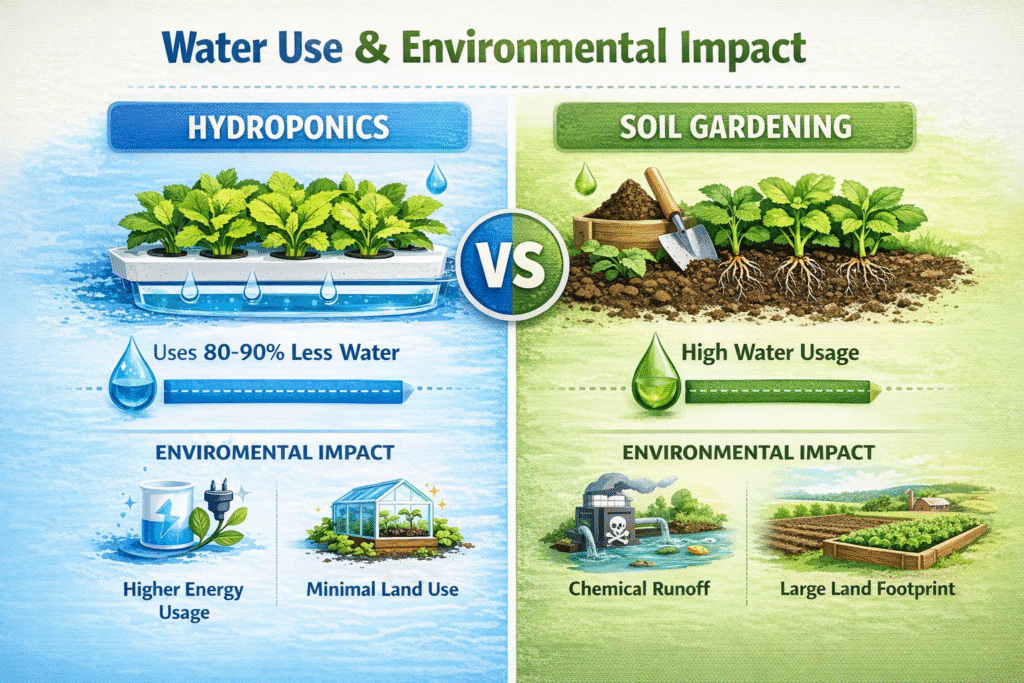
Water usage is another important difference. Soil gardening often wastes water through evaporation and runoff. Much of the water never reaches the roots. This can be frustrating and costly.
Hydroponics uses water very efficiently. Water circulates and gets reused inside the system.
Plants absorb exactly what they need. Very little water gets wasted.
When discussing Hydroponics vs Soil Gardening: A Clean Comparison, water efficiency stands out strongly. Hydroponics can use up to ninety percent less water. This matters in dry regions and urban areas. It also helps the environment long-term.
Soil gardening depends on rainfall and climate. Unpredictable weather can ruin months of effort.
Hydroponics removes weather stress completely. You grow plants all year, rain or shine.
Using less water also means less pollution. Fertilizers in soil can wash into rivers.
Hydroponic nutrients stay contained. This makes hydroponics a cleaner environmental choice.
hydroponic growing techniques deeper understanding.
Yield, Growth Speed, and Maintenance
Gardeners love seeing fast results. Soil gardening often takes patience.
Plants grow at nature’s pace, which can be slow. Growth depends on soil health and seasons.
Hydroponic plants usually grow faster. Nutrients reach roots directly and efficiently.
Plants spend less energy searching for food. This leads to quicker harvests.
In Hydroponics vs Soil Gardening: A Clean Comparison, hydroponics often wins on productivity.
You get more produce in less space. This is perfect for small homes and apartments.
Every inch gets used wisely. Maintenance also feels different. Soil gardening needs regular weeding and digging. Hydroponics removes weeds completely. There is nothing to pull or dig.
However, hydroponics needs monitoring. You check water levels, nutrients, and pH.
This sounds technical, but becomes easy with practice. Many systems are beginner-friendly today.
Soil gardening feels simpler at first. Yet long-term care can be demanding.
Both methods reward attention and consistency. The difference lies in cleanliness and control.
Which Method Feels Right for You?
Choosing between these methods is personal. Some people love touching soil and feeling grounded.
Others prefer clean systems and modern tools. Neither choice is wrong.
This Hydroponics vs Soil Gardening: A Clean Comparison shows one clear truth.
Hydroponics offers a cleaner, more controlled experience. Soil gardening offers tradition and natural connection. Your lifestyle decides the best fit.
If space is limited, hydroponics works beautifully. If you enjoy outdoor work, soil gardening feels satisfying. Both can grow healthy, delicious food. Both bring joy and learning.
Start small if you feel unsure. Try herbs in a hydroponic setup. Grow vegetables in soil alongside them.
Experience the difference firsthand. Gardening should feel fun, not stressful. Choose the method that keeps you smiling. Clean hands or muddy boots, both grow happiness.