
Technology is changing the way we grow food. As cities become more crowded and agricultural resources become more limited, growers are looking for smarter ways to produce fresh vegetables and herbs using less space and better control. Hydroponic technology combines plant science, water management, automation, sensors, lighting, and modern growing systems to create a controlled environment for plants.
Hydroponics does not simply mean growing plants without soil. It is a complete growing approach where water, nutrients, oxygen, light, temperature, and other conditions can be carefully managed. With the right technology, growers can understand what their plants need and respond more accurately.
At HydroSiti, our goal is to help beginners, home growers, and aspiring farmers understand hydroponic technology in a simple and practical way.
What Is Hydroponic Technology?
Hydroponic technology refers to the equipment, systems, tools, and techniques used to grow plants without traditional soil.
A modern hydroponic setup may include water pumps, air pumps, nutrient reservoirs, grow lights, timers, pH meters, EC meters, sensors, irrigation systems, environmental controls, and automation.
The exact technology depends on the type and size of the hydroponic system. A small home setup may only need a simple pump and timer, while a commercial farm can use sensors, automated irrigation, climate control, and data monitoring.
The main purpose is simple: provide plants with the right growing conditions while reducing unnecessary waste and manual work.
Why Is Technology Important in Hydroponics?
Plants need water, nutrients, oxygen, light, and suitable environmental conditions to grow. Traditional gardening can make it difficult to control all of these factors precisely.
Hydroponic technology gives growers greater control.
For example, instead of watering plants manually, an automated pump can deliver nutrient solution at scheduled intervals. Instead of guessing whether nutrient concentration is suitable, an EC meter can provide a measurement. A pH meter can help growers monitor the acidity or alkalinity of the nutrient solution.
This information allows growers to make better decisions.
Water and Nutrient Management
Water is one of the most important parts of every hydroponic system.
A hydroponic reservoir stores the nutrient solution, while pumps and pipes can move water to the plants. Depending on the system, the nutrient solution may be recirculated back into the reservoir.
Technology can help monitor:
- Water level
- Nutrient concentration
- pH
- Electrical conductivity (EC)
- Water temperature
- Irrigation timing
- Flow rate
Regular monitoring is important because plants continuously take up water and nutrients. Evaporation and plant uptake can also change the concentration of the solution.
Good water management can improve consistency and help growers identify problems before plants show severe symptoms.
pH and EC Monitoring
Two important measurements in hydroponics are pH and EC.
pH
pH indicates how acidic or alkaline the nutrient solution is. Different crops have different preferred ranges, so growers should follow crop-specific guidance rather than using one value for every plant.
Keeping pH within a suitable range helps plants access nutrients effectively.
EC
EC, or electrical conductivity, provides an indication of the concentration of dissolved salts in the nutrient solution.
If EC is too low, plants may not receive enough nutrients. If it is too high, the solution can create excessive salt stress.
A reliable pH meter and EC meter can therefore become valuable tools for serious hydroponic growers
Automated Irrigation Systems
Automation is one of the most useful developments in hydroponic farming.
Timers and controllers can operate pumps according to a planned schedule. More advanced systems can use sensors and programmable controllers to adjust irrigation based on growing conditions.
Automation can help reduce repetitive manual work and make water delivery more consistent.
However, automation does not mean a system can be ignored. Pumps can fail, pipes can become blocked, sensors can give incorrect readings, and power interruptions can affect the plants.
Regular inspection remains essential.
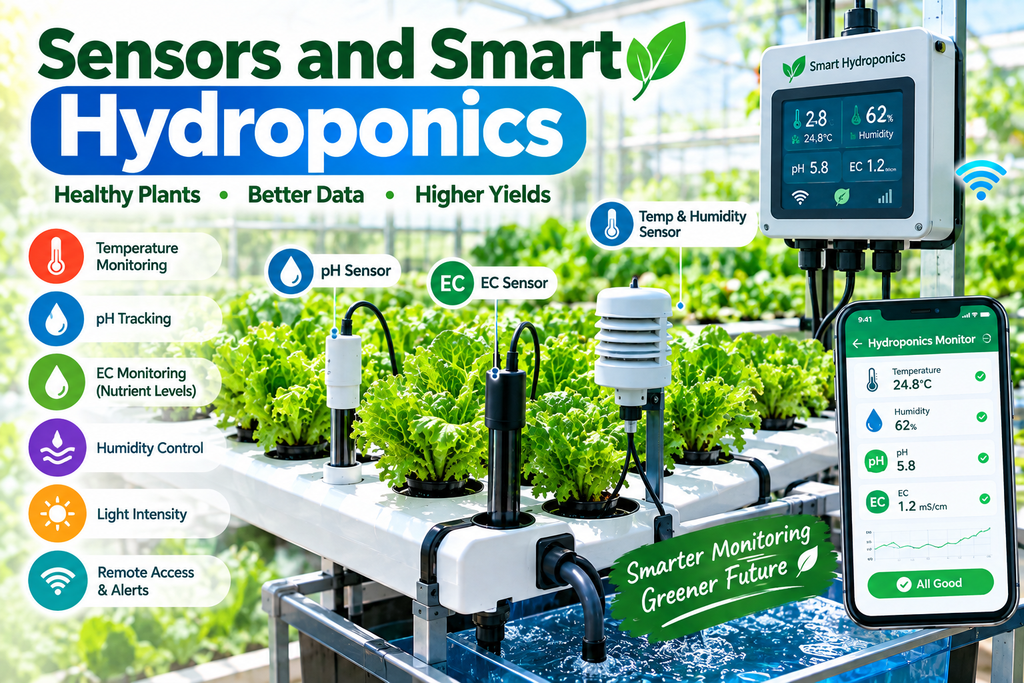
Sensors and Smart Hydroponics
Modern hydroponic farms can use sensors to collect information about the growing environment.
Depending on the setup, sensors may monitor:
Some systems can send this information to a display, computer, or mobile device.
This creates the foundation for smart hydroponics, where growers can use real-time information to understand their plants and make better decisions.
LED Grow Lights
Lighting is especially important for indoor hydroponic farming.
LED grow lights have become popular because they can provide controlled artificial lighting for plants. Growers can select suitable light intensity and photoperiods according to the crop and growth stage.
A lighting system should be designed around the plant’s requirements rather than simply choosing the brightest light available.
Factors such as light intensity, duration, distance from plants, heat, electricity consumption, and crop type should all be considered.
Climate Control Technology
Temperature and humidity can strongly affect plant growth.
In protected or indoor environments, growers may use fans, ventilation systems, cooling equipment, heating equipment, humidifiers, or dehumidifiers to create more stable conditions.
A climate controller can coordinate some of these devices automatically.
Good environmental management can help reduce plant stress and create more consistent growing conditions.
Vertical Hydroponic Technology
Vertical farming uses height to increase growing capacity within a limited footprint.
Plants can be arranged in towers, stacked channels, shelves, or other vertical structures. This approach can be useful in urban environments where floor space is limited.
Vertical hydroponic systems can also be combined with LED lighting, automated irrigation, sensors, and climate-control equipment.
The challenge is designing the system so that every plant receives suitable light, water, nutrients, and airflow.
Data and Monitoring
Data can turn hydroponic farming from guesswork into a more measurable process.
Growers can record:
- pH readings
- EC readings
- Water consumption
- Temperature
- Humidity
- Plant growth
- Harvest weight
- Nutrient use
- System problems
Keeping records helps growers compare different growing cycles and identify patterns.
For example, if a crop repeatedly develops problems when temperature rises, recorded data may help reveal the relationship between environmental conditions and plant performance.
Hydroponic Technology for Beginners
You do not need expensive equipment to start learning hydroponic technology.
A beginner can start with a small system, a basic water pump if required, a suitable nutrient solution, growing media, and simple monitoring tools.
Learn the fundamentals first:
- Understand how the hydroponic system works.
- Learn how to prepare and manage nutrient solution.
- Monitor pH and EC.
- Check water levels regularly.
- Observe plant roots and leaves.
- Keep equipment clean.
- Record your results.
- Improve the system gradually.
Starting small can make troubleshooting easier and reduce unnecessary expenses.
The Future of Hydroponic Technology
The future of hydroponics is likely to involve greater automation, better sensors, improved energy efficiency, advanced LED lighting, artificial intelligence, remote monitoring, and data-driven crop management.
Technology may help growers detect changes earlier, optimize resources, and improve production consistency.
However, technology alone cannot guarantee a successful harvest. Healthy plants still depend on appropriate nutrition, oxygen, light, temperature, humidity, sanitation, and good growing practices.
The best systems combine technology with practical plant knowledge.
Build a Smarter Growing System With HydroSiti
Hydroponic technology gives growers new ways to understand and manage plant growth. From simple pumps and timers to advanced sensors and automated climate-control systems, technology can make hydroponic farming more measurable and manageable.
You do not need to become an expert overnight.
Start with the basics, understand your system, monitor your plants, learn from your results, and upgrade your technology when there is a genuine need.
HydroSiti is here to help you explore hydroponic technology, understand modern growing systems, and discover practical ways to grow smarter.
Learn the technology. Understand the plants. Build a better growing future.