
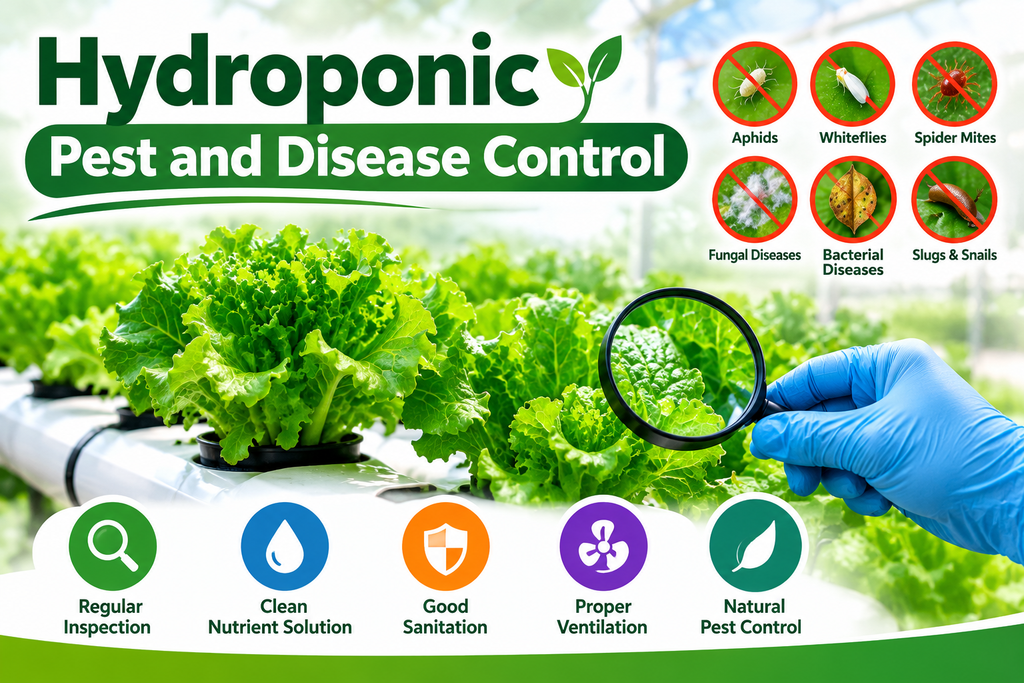
Hydroponic Pest and Disease Control is an important part of keeping hydroponic plants healthy and productive. Hydroponic gardening provides plants with water, nutrients, light, and oxygen without traditional soil, but it does not completely protect them from pests and diseases.
Insects, fungi, bacteria, and unsuitable growing conditions can still affect a hydroponic system. This is why Hydroponic Pest and Disease Control is an important part of maintaining healthy plants and consistent growth.
With proper Hydroponic Pest and Disease Control, growers can identify problems early and reduce the risk of serious damage. Regular inspection, good hygiene, proper airflow, and suitable environmental conditions all play an important role.
This guide explains practical Hydroponic Pest and Disease Control methods, including how to identify common problems, prevent infestations, and respond when pests or diseases appear. Understanding these basic Hydroponic Pest and Disease Control practices can help beginners maintain a cleaner and healthier growing environment.
Whether you are growing leafy greens, herbs, strawberries, tomatoes, or other crops, effective Hydroponic Pest and Disease Control can help you protect your plants and maintain a more reliable hydroponic garden.
Why Matters in Hydroponics
Healthy plants normally grow quickly when they receive suitable nutrients, light, temperature, humidity, and water. But an unhealthy growing environment can make plants more vulnerable.
Pests may damage leaves, stems, roots, and flowers. Diseases can spread through water, contaminated equipment, plant material, or poor environmental conditions.
A small problem can sometimes spread quickly because hydroponic systems often share the same water reservoir.
That is why early detection is one of the most important parts of hydroponic plant care.
Common Hydroponic Pests
Several insects can attack hydroponic plants. Some feed directly on plant tissue, while others weaken plants by sucking their sap.
1. Aphids
Aphids are small, soft-bodied insects that are commonly found on young leaves and new plant growth.
Signs of aphids
- Curled or distorted leaves
- Sticky substance on leaves
- Slow plant growth
- Small insects underneath leaves
- Yellowing or weakened leaves
Aphids can reproduce quickly, so checking new growth regularly is important.
Control
Remove heavily affected leaves when practical and isolate severely infested plants. In a small growing system, physically removing insects and using an appropriate insect-control product according to its label can help.
2. Spider Mites
Spider mites are extremely small and can be difficult to see. They often become a problem in warm and dry conditions.
Signs of spider mites
- Tiny pale spots on leaves
- Yellow or bronze-looking leaves
- Fine webbing
- Weak plant growth
- Leaves becoming dry or damaged
Regularly inspect the underside of leaves because spider mites often hide there.
Improving environmental conditions and treating an infestation early can help prevent serious plant damage.
3. Whiteflies
Whiteflies are tiny flying insects that commonly stay on the underside of leaves.
Signs of whiteflies
- Small white insects flying when the plant is disturbed
- Yellowing leaves
- Sticky residue
- Weak or slow plant growth
Yellow sticky traps can help monitor flying adults, while affected plants should be inspected carefully.
4. Thrips
Thrips are very small insects that can damage leaves, flowers, and young plant tissue.
Common signs
- Silvery marks on leaves
- Small dark spots
- Distorted new growth
- Damaged flowers
- Reduced plant growth
Because thrips can hide in small spaces, regular inspection is important.
Common Hydroponic Diseases
Not every plant problem is caused by insects. Diseases caused by fungi, bacteria, and other pathogens can also affect hydroponic crops.
1. Root Rot
Root rot is one of the most serious problems in hydroponic systems.
Healthy roots are generally firm and light-colored, although exact appearance can vary by crop and growing system. Diseased roots may become brown, soft, slimy, or unpleasant-smelling.
Possible causes
- Low dissolved oxygen
- Poor water circulation
- Excessively warm nutrient solution
- Damaged roots
- Unsanitary equipment
- Pathogens in the root zone
Prevention
Keep the root zone properly oxygenated, maintain good water movement, clean equipment between crops, and avoid conditions that allow stagnant water.
If one plant has severely diseased roots, removing it may help reduce the chance of spreading the problem.
2. Powdery Mildew
Powdery mildew is a fungal disease that appears as a white, powder-like coating on leaves and stems.
Common signs
- White patches on leaves
- Distorted leaves
- Reduced plant growth
- Premature leaf aging
High humidity and poor air circulation can increase the risk.
Prevention
Maintain good airflow around plants and avoid creating excessively humid conditions. Remove severely affected plant material and improve the growing environment.
3. Downy Mildew
Downy mildew can cause yellow or pale patches on the upper surface of leaves. Under suitable conditions, growth may also appear on the underside.
Prevention
Good ventilation, suitable plant spacing, careful humidity management, and avoiding prolonged leaf wetness can reduce disease pressure.
4. Bacterial Diseases
Bacterial problems may cause spots, soft tissue, discoloration, wilting, or tissue breakdown.
Bacteria can spread through contaminated tools, water, hands, plant debris, or infected plant material.
Prevention
- Clean tools regularly
- Remove infected plant material
- Avoid unnecessary contact with plants
- Keep growing areas clean
- Do not introduce unhealthy plants into the system
Good sanitation is one of the simplest ways to reduce disease problems.
How to Prevent Pests and Diseases
Prevention is usually easier than trying to control a serious infestation or disease outbreak.
1. Start With Healthy Plants
1. Start With Healthy Plants
Prevention begins with choosing healthy plants for your hydroponic system. Before adding seedlings or young plants, carefully inspect them for signs of pests, disease, or poor growth. Look for fresh green leaves, strong and healthy roots, and steady growth. Avoid plants with visible insects, damaged leaves, unusual spots, mold, fungal growth, yellowing, or unexplained wilting. Even a small infestation can spread quickly in a hydroponic environment and affect other plants. Whenever possible, keep new plants separate for a short period and monitor them before introducing them to your main system. Starting with healthy plants creates a cleaner and more reliable growing environment..
2. Keep the Growing Area Clean
Keeping your hydroponic growing area clean can help reduce the risk of pests, diseases, algae, and other problems. Regularly remove dead leaves, fallen plant material, damaged roots, and other debris from around the system. Check the reservoir, growing containers, pipes, and surrounding area for buildup or unwanted growth. Clean tools, containers, reservoirs, and reusable equipment between crops according to your system’s requirements. Good hygiene also helps prevent plant waste from becoming a source of contamination. By maintaining a clean growing environment, you can support healthier plants and make it easier to identify potential problems before they spread.
3. Inspect Plants Regularly
Regular plant inspection is one of the simplest ways to prevent pests and diseases from becoming serious problems. You do not need expensive equipment or advanced knowledge to monitor your plants. Spend a few minutes checking the top and underside of leaves, new growth, stems, and roots. Also examine the water, reservoir, and growing media for unusual changes, discoloration, algae, or signs of contamination. Look for insects, spots, damaged leaves, wilting, or other changes in plant health. Identifying problems early gives you a better chance of taking corrective action before they spread throughout your hydroponic system.
Quick Inspection Checklist
- ☐ Check the top and underside of leaves for insects or spots.
- ☐ Look for healthy new growth.
- ☐ Inspect stems for damage or discoloration.
- ☐ Check roots for healthy color and unusual growth.
- ☐ Examine the reservoir and water for algae or debris.
- ☐ Check the growing media for excess moisture, mold, or pests.
- ☐ Remove damaged or infected plant material promptly.
4. Maintain Good Air Circulation
Good air circulation is important for maintaining healthy hydroponic plants. Proper airflow helps move fresh air around the leaves and can reduce areas of excessive humidity. Poor ventilation may create a warm, damp environment where certain fungal problems can develop more easily. Use fans to gently circulate air around the plants without creating excessively strong airflow. Make sure air reaches different areas of the growing space rather than focusing on one spot. Maintaining balanced airflow can help create a healthier and more stable environment for plant growth.
5. Manage Temperature and Humidity
Temperature and humidity can strongly affect hydroponic plant health. Excessive heat may stress plants, while high humidity can create conditions that encourage some fungal diseases. Keep temperature and humidity within a suitable range for the specific crop you are growing. Avoid using the same environmental targets for every plant, as different crops have different requirements. Regularly monitoring these conditions can help maintain a healthier growing environment and reduce the risk of plant problems.
Use Integrated Pest Management
Integrated Pest Management (IPM) is a practical approach to managing pests in hydroponic systems. Instead of immediately relying on pesticides, IPM combines several prevention and control methods. These may include regularly inspecting plants, maintaining a clean growing area, improving airflow, removing affected plant material, and using suitable pest-control methods when necessary. The goal is to identify pest problems early and manage them with the most appropriate method while reducing unnecessary pesticide use.
Step 1: Monitor
Check plants regularly for insects and disease symptoms.
Step 2: Identify
Find out what is actually causing the problem.
Aphids, spider mites, nutrient deficiencies, and environmental stress can sometimes produce symptoms that look similar.
Step 3: Prevent
Improve sanitation, airflow, environmental conditions, and plant spacing.
Step 4: Physically Remove Problems
Remove heavily damaged leaves or affected plants when appropriate.
Step 5: Use Biological or Chemical Controls When Necessary
If additional treatment is required, select a product that is legally approved for the crop and intended use, and carefully follow the product label.
Never assume that a pesticide or household chemical is safe simply because it is commonly recommended online.
Do Nutrient Problems Look Like Diseases?
Sometimes they do.
For example, yellow leaves may be caused by:
- Nutrient imbalance
- Incorrect pH
- Root damage
- Overwatering or poor oxygenation
- Disease
- Pest feeding
- Environmental stress
This is why it is important to investigate the growing conditions before treating a plant.
Checking pH and EC can help determine whether the nutrient solution is within a suitable range for the crop.
However, pH and EC measurements alone cannot diagnose every plant disease.
What Should You Do When You Find a Pest or Disease?
Do not panic.
Follow a simple process:
1. Isolate the affected plant if possible.
2. Identify the problem before treating it.
3. Inspect nearby plants.
4. Remove severely damaged plant material when appropriate.
5. Check the root zone and growing environment.
6. Clean tools and equipment.
7. Correct environmental problems.
8. Monitor the plants after treatment.
If the problem continues to spread or you cannot identify it, consider getting advice from a qualified horticulture or plant-health professional.
Final Thoughts
Pest and disease control is an important part of successful hydroponic gardening. You do not need to become a plant pathologist to protect your crops.
The most important habits are simple:
Inspect your plants regularly. Keep your system clean. Maintain good airflow. Monitor the root zone. Manage temperature and humidity. Check pH and EC. Identify problems early.
Remember that prevention is usually better than treatment.
A clean growing environment combined with regular observation can help you catch problems before they become serious. With good plant care and an integrated approach to pest management, hydroponic growers can maintain healthier plants and achieve more consistent harvests.
Healthy roots + healthy leaves + a clean growing environment = healthier hydroponic plants.