Growing plants hydroponically can be simple and rewarding once you understand the basics. Unlike traditional gardening, hydroponics does not use soil. Instead, plants receive water, nutrients, oxygen, and support through a carefully managed growing system.
Whether you are growing lettuce on a small balcony or building a larger hydroponic garden, good daily habits can make a big difference.
This guide shares practical hydroponic growing tips for beginners and experienced growers to help you grow stronger plants and achieve better harvests.
1. Choose the Right Plants
Not every plant has the same growing requirements.
If you are new to hydroponics, start with crops that are relatively easy to manage, such as:
- Lettuce
- Spinach
- Basil
- Mint
- Kale
- Pak choi
- Coriander
- Other leafy greens
Once you become comfortable with your system, you can experiment with crops such as tomatoes, cucumbers, peppers, and strawberries.
Choose plants according to your available space, temperature, lighting, and experience level.
2. Give Plants Enough Light
Light is one of the most important requirements for healthy plant growth.
Plants use light to perform photosynthesis, allowing them to produce energy for growth.
If you are growing outdoors, choose a location that provides suitable sunlight for your crop.
For indoor hydroponics, you may need grow lights.
Watch your plants for signs of insufficient light. Plants that stretch toward a light source or develop weak, elongated stems may not be receiving enough light.
At the same time, excessive light or heat can stress plants.
Tip: Keep the light source at an appropriate distance and follow the manufacturer’s recommendations when using artificial grow lights.
3. Keep Your Water Clean
Water is the foundation of a hydroponic system.
Because the roots are directly exposed to the nutrient solution, poor water quality can quickly affect plant health.
Check your reservoir regularly and watch for:
- Unusual smell
- Excessive algae
- Dirt or plant debris
- Cloudy water
- Poor water movement
Keeping the reservoir and equipment clean helps create a healthier growing environment.
Avoid allowing dead leaves or other organic material to accumulate in the water.
4. Monitor pH Regularly
pH affects how easily plants can absorb nutrients from the nutrient solution.
If the pH is too high or too low, plants may struggle to absorb certain nutrients even when those nutrients are present.
Different crops have slightly different preferences, but many hydroponic plants generally grow well in a mildly acidic range.
Instead of trying to guess, use a reliable pH meter or test kit and monitor the solution regularly.
Make adjustments gradually and avoid making large changes without checking the result.
5. Monitor EC and Nutrient Strength
EC, or electrical conductivity, provides an indication of the concentration of dissolved salts in the nutrient solution.
If EC is too low, plants may not receive enough nutrients.
If EC is too high, the nutrient solution can become too concentrated and may stress the roots.
Different plants require different nutrient strengths, and requirements can change as plants develop.
Always follow the nutrient manufacturer’s mixing instructions and use crop-specific recommendations where available.
6. Give Roots Enough Oxygen
Healthy roots need oxygen.
A common mistake beginners make is focusing only on nutrients while forgetting the importance of oxygen around the root zone.
Depending on your hydroponic system, oxygen can be supplied through water movement, air pumps, air stones, or other system designs.
Poorly oxygenated roots may become weak and can be more vulnerable to root problems.
Healthy roots are the foundation of healthy hydroponic plants.
7. Maintain Good Air Circulation
Good airflow helps plants exchange gases and can reduce excessively humid areas around leaves.
Indoor growers can use fans to keep air moving.
However, the goal is not to create extremely strong wind. Plants should move gently rather than being continuously battered by airflow.
Good circulation can also help create a more uniform growing environment.
8. Control Temperature and Humidity
Temperature and humidity affect plant growth, water consumption, nutrient uptake, and disease risk.
Very high temperatures can stress plants and increase water temperature. Excessive humidity can increase the risk of certain fungal problems.
Try to maintain environmental conditions suitable for the specific crop you are growing.
A simple thermometer and humidity meter can help you understand what is happening inside your growing area.
9. Do Not Overcrowd Plants
It can be tempting to place as many plants as possible into a hydroponic system.
However, overcrowding can cause problems.
Plants need enough:
- Light
- Airflow
- Root space
- Nutrients
- Water
- Growing space
As plants become larger, leaves may block light from reaching other plants.
Follow appropriate spacing recommendations for your crop and growing system.
10. Inspect Plants Every Day
You do not need to spend hours checking your plants.
A few minutes each day can help you identify problems early.
Look at:
Leaves: Check for yellowing, spots, holes, curling, or unusual growth.
Stems: Look for weakness, damage, or discoloration.
Roots: Check for healthy development and unusual color, smell, or texture.
Pests: Look underneath leaves for aphids, whiteflies, spider mites, thrips, and other insects.
Water: Check the reservoir and nutrient solution.
Early detection is one of the best ways to protect a hydroponic garden.
11. Remove Dead or Damaged Leaves
Dead and damaged plant material should not be left around the growing system unnecessarily.
Remove unhealthy leaves using clean tools when appropriate.
This helps keep the growing area tidy and makes it easier to inspect the plants.
Always avoid unnecessarily damaging healthy plant tissue.
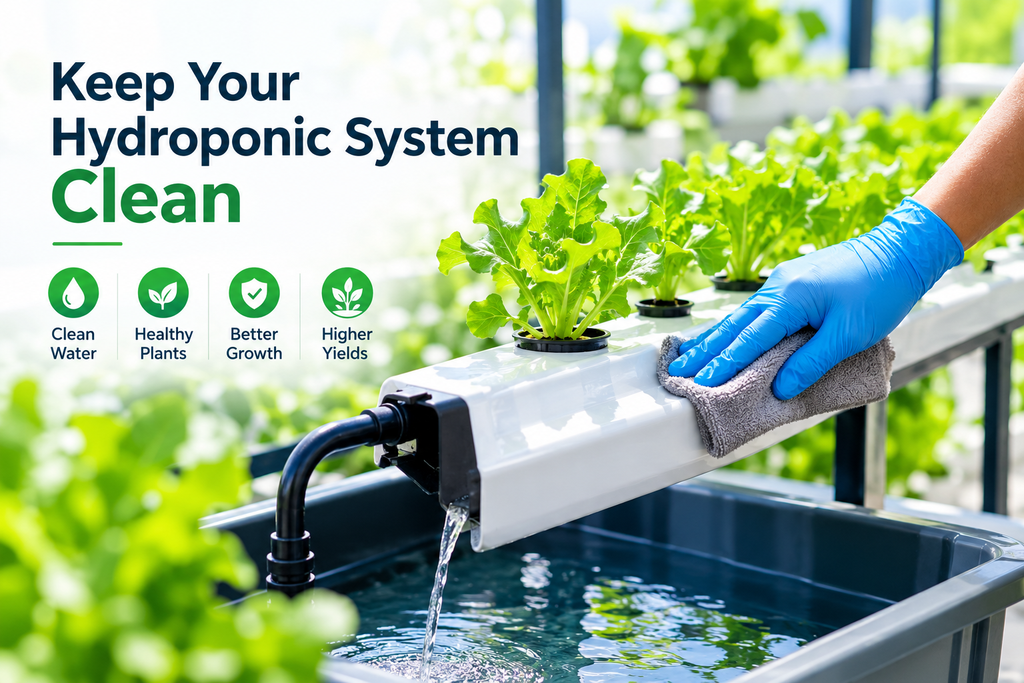
12. Keep Your Hydroponic System Clean
Cleaning should be part of your regular hydroponic routine.
Clean or maintain:
- Reservoirs
- Growing channels
- Pumps
- Air stones
- Net pots
- Tools
- Growing containers
The exact cleaning procedure depends on the system and equipment.
Between growing cycles, thoroughly clean reusable components according to their material and manufacturer’s recommendations.
13. Avoid Changing Too Many Things at Once
If a plant starts looking unhealthy, beginners sometimes change everything at the same time.
They may change the nutrient concentration, pH, lighting, temperature, and water schedule all at once.
This makes it difficult to understand what actually solved the problem.
Instead, inspect the plant carefully and identify the most likely cause first.
Make controlled adjustments and observe how the plant responds.
14. Keep a Growing Record
Keeping simple records can make you a much better grower.
Write down:
- Plant variety
- Planting date
- Nutrient changes
- pH readings
- EC readings
- Temperature
- Lighting schedule
- Problems observed
- Harvest date
- What worked well
Over time, your records can help you understand what works best in your particular environment.
15. Learn the Difference Between Nutrient Problems and Diseases
Yellow leaves do not automatically mean that your plant has a disease.
Yellowing can result from:
- Nutrient imbalance
- Incorrect pH
- Root problems
- Insufficient light
- Temperature stress
- Pests
- Disease
- Natural aging of older leaves
Before treating a plant, look at the entire growing environment.
Checking pH and EC, examining the roots, and inspecting the leaves can help narrow down the possible cause.
16. Start Small and Learn
You do not need a large hydroponic farm to begin.
A small system with a few plants can teach you important skills such as:
- Mixing nutrients
- Measuring pH
- Measuring EC
- Managing water
- Controlling light
- Inspecting roots
- Identifying pests
- Understanding plant growth
Once you understand the basics, you can gradually expand your system.
17. Be Patient
Plants do not grow at the same speed every day.
Growth depends on the plant variety, age, environment, nutrients, light, temperature, and growing system.
Avoid constantly changing your setup because a plant did not grow noticeably overnight.
Observe trends over several days and keep records.
Good hydroponic growing is about consistency rather than constantly making changes.
A Simple Daily Hydroponic Checklist
Use this quick checklist when checking your plants:
☐ Check plant leaves and new growth
☐ Look for pests or unusual spots
☐ Check the root zone when accessible
☐ Check water level
☐ Check for unusual smell or cloudy water
☐ Check pH when required
☐ Check EC when required
☐ Check temperature and humidity
☐ Check lights and airflow
☐ Remove dead plant material
A few minutes of regular monitoring can prevent small problems from becoming major problems.
Final Thoughts
Successful hydroponic growing does not depend on complicated equipment alone. It comes from understanding what plants need and maintaining the right conditions consistently.
Give your plants suitable light, water, nutrients, oxygen, temperature, humidity, and space. Monitor pH and EC, keep your system clean, inspect plants regularly, and respond to problems early.
Most importantly, learn from every growing cycle.
Your first crop may not be perfect, and that is completely normal. Every plant you grow gives you more information about your system and your growing environment.
Start small, observe carefully, keep good records, and improve one step at a time.
Healthy plants start with good growing habits.