
Growing fresh vegetables at home does not always require a large garden or traditional soil. Instead, hydroponic systems allow plants to grow with their roots supported by an inert growing medium while receiving water and nutrients through a controlled solution. Among these systems, the Dutch Bucket hydroponics system is a popular option for growing larger plants such as tomatoes, cucumbers, peppers, and eggplants.
So, what makes the Dutch Bucket system useful for beginners? The setup is relatively simple, flexible, and suitable for both small and larger growing spaces. In addition, each plant can grow in its own bucket while sharing a common nutrient reservoir and irrigation system.
However, successful growing requires more than simply adding plants and water. You need to understand how the buckets, growing medium, pump, nutrient solution, and drainage system work together.
In this guide, you will learn how a Dutch Bucket hydroponics system works, what equipment you need, how to set it up, which crops grow well in it, and how to maintain it for healthy plant growth.
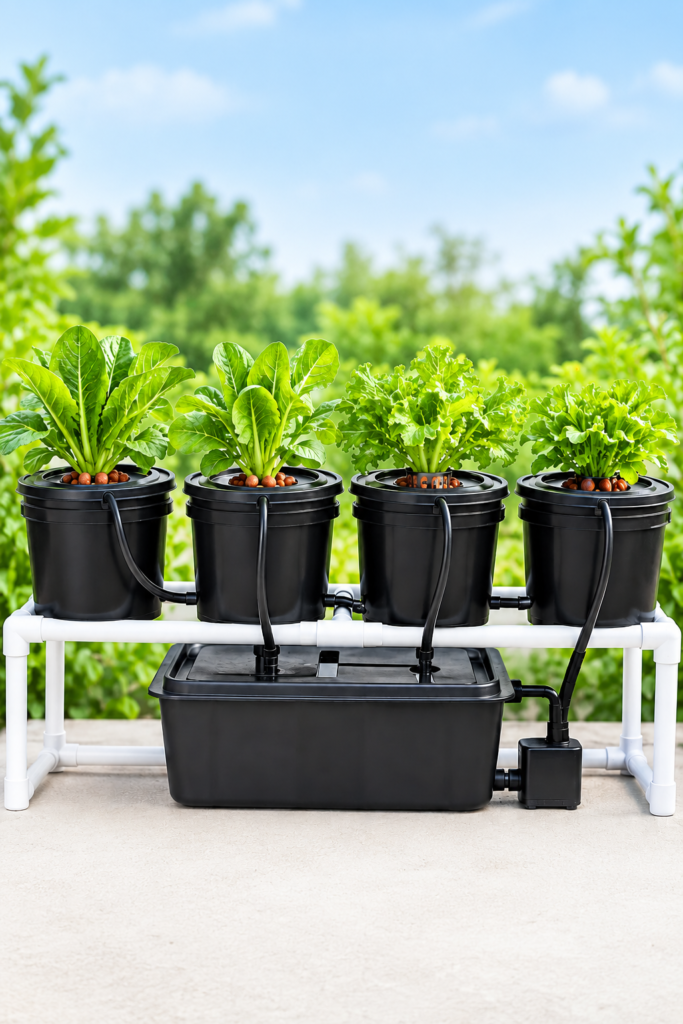
What Is a Dutch Bucket Hydroponics System?
A Dutch Bucket system is a recirculating hydroponic system where individual buckets are connected to a shared nutrient reservoir.
A typical setup includes:
- Dutch Buckets
- Growing medium
- Nutrient reservoir
- Water pump
- Main supply pipe
- Drip lines or emitters
- Drainage pipe
- Return line
- Hydroponic nutrients
- Plant support or trellis
The pump sends nutrient solution from the reservoir to the buckets. The solution passes through the growing medium and around the roots. Excess solution drains from the bucket and returns to the reservoir.
Simple flow:
Reservoir → Pump → Supply Line → Buckets → Drain Line → Reservoir
Because the nutrient solution is recirculated, the same water can be used repeatedly while the grower monitors and adjusts the system.
How Does a Dutch Bucket System Work?
Each plant has its own growing space, which makes this system particularly useful for larger crops.
The growing medium supports the plant while allowing roots to receive moisture, nutrients, and oxygen. Drip irrigation provides the nutrient solution at regular intervals, while the drainage system removes excess solution.
The system works best when water flows evenly through every bucket.
If one bucket receives too much water while another receives too little, plants may grow differently. That’s why checking the pump, drip emitters, pipes, and drainage regularly is important.
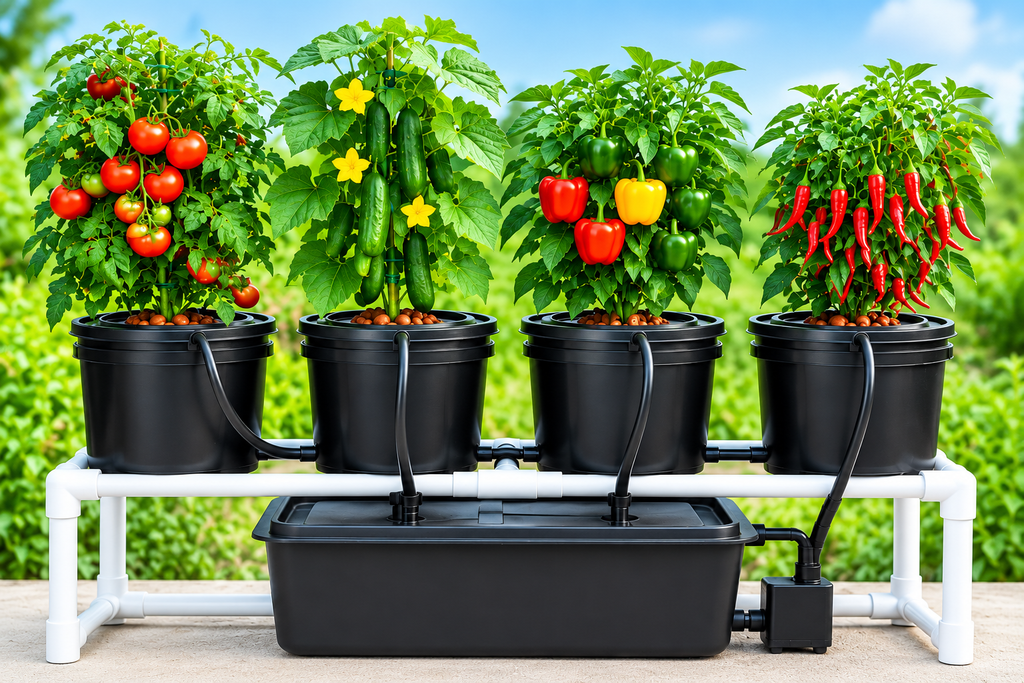
What Can You Grow in Dutch Buckets?
Dutch Buckets are especially useful for large fruiting and vine crops.
Popular choices include:
- Tomatoes
- Cucumbers
- Bell peppers
- Chili peppers
- Eggplants
- Melons
- Some larger herbs
Tomatoes and cucumbers can become heavy, so provide a strong trellis or plant support before the plants become large.
For lettuce, spinach, and other small leafy greens, systems such as NFT or DWC may be simpler and more space-efficient.
Why Choose Dutch Bucket Hydroponics?
One of the biggest advantages is the amount of space available for each plant.
Large Root Space
Each plant gets an individual bucket, allowing larger root systems to develop compared with some compact hydroponic systems.
Good for Fruiting Crops
The system is well suited to crops that become large and produce fruits over a longer growing period.
Easy to Expand
You can begin with a few buckets and add more later if your pump, reservoir, and plumbing can handle the additional plants.
Efficient Water Use
Because the nutrient solution can be recirculated, the system can reduce water waste compared with methods where water is continuously discarded.
Individual Plant Management
Each plant has its own bucket, making spacing, inspection, and replacement easier.
Choosing the Right Growing Medium
The growing medium supports the plant and helps create a healthy root environment.
Perlite
Perlite is lightweight and provides good aeration. It is commonly used when growers want plenty of air around the roots.
Coco Coir
Coco coir can retain moisture while providing useful air space. Make sure the material is suitable for hydroponics and prepared correctly before use.
Clay Pebbles
Expanded clay pebbles provide good drainage and aeration. They can also be cleaned and reused when properly maintained.
There is no single perfect medium for every grower. Your choice should depend on the crop, climate, irrigation frequency, and system design.
Nutrients, pH and EC
Plants grown in hydroponics receive their essential minerals through the nutrient solution.
Important nutrients include nitrogen, phosphorus, potassium, calcium, magnesium, sulfur, and several micronutrients.
But more fertilizer does not mean faster growth.
An overly strong nutrient solution can stress plants, while insufficient nutrients can cause poor growth or deficiencies.
That’s why hydroponic growers should monitor pH and EC.
pH tells you how acidic or alkaline the nutrient solution is. An unsuitable pH can reduce the availability of certain nutrients.
EC, or electrical conductivity, gives an indication of the concentration of dissolved salts in the solution.
The ideal pH and EC range depends on the crop and growth stage. Always follow the instructions for your nutrient product and use crop-specific recommendations.
👉 New to pH and EC? Read our [Hydroponic pH & EC Guide] to understand these measurements more easily.
How to Build a Dutch Bucket System
A basic Dutch Bucket system can be built in several stages.
1. Position the Buckets
Place the buckets securely on a suitable support. Plan enough space for plants to grow without overcrowding.
2. Install Drainage
Fit the bucket outlets and connect them to the return drainage pipe. Make sure the system allows water to flow back toward the reservoir.
3. Install the Supply Line
Connect the main supply pipe from the reservoir to the growing area.
4. Add Drip Lines
Connect individual drip lines or emitters to each bucket.
5. Install the Reservoir and Pump
Place the reservoir below the growing area and install a pump capable of supplying all buckets.
6. Add the Growing Medium
Fill the buckets with your selected hydroponic growing medium.
7. Add Plants
Transplant healthy seedlings carefully and provide suitable support for larger crops.
8. Test the System
Run the pump and check every bucket. Look for leaks, blocked emitters, uneven water flow, and drainage problems before relying on the system.
Dutch Bucket Maintenance
Regular maintenance is one of the most important parts of successful hydroponic growing.
Check:
- Reservoir water level
- Pump operation
- Drip emitters
- Supply pipes
- Drainage
- pH
- EC
- Root health
- Plant growth
- Pests and diseases
Clean equipment when necessary and inspect the system regularly.
A blocked emitter can cause one plant to receive much less water than the others. Finding these problems early can prevent unnecessary crop damage.
Common Dutch Bucket Problems
Uneven Water Flow
If some plants receive more nutrient solution than others, inspect the pump, emitters, pipes, and system layout.
Blocked Drippers
Debris or nutrient deposits can restrict water flow. Clean or replace affected components according to the equipment manufacturer’s instructions.
Root Problems
Poor oxygenation, excessive heat, stagnant water, or pathogens can contribute to unhealthy roots. Good circulation, cleanliness, and suitable growing conditions are important.
Nutrient Problems
Yellow leaves or poor growth do not always mean the plant needs more fertilizer. Check pH, EC, roots, light, temperature, and pests before making major changes.
Useful Equipment for Dutch Bucket Hydroponics
You don’t need to buy everything at once. Start with the equipment required for your particular setup.
Useful equipment may include:
- Dutch Buckets
- Water pump
- Reservoir
- Drip irrigation kit
- PVC pipes and fittings
- Growing medium
- Hydroponic nutrients
- pH meter
- EC meter
- Plant support or trellis
- Timer
Helpful Products for Beginners
A pH meter can make regular nutrient-solution testing easier.
An EC meter helps you monitor nutrient concentration.
A suitable hydroponic nutrient kit can simplify nutrient management, especially for beginners who are unsure which individual nutrients to purchase.
A Dutch Bucket growing kit may also be useful if you want a simpler starting point instead of buying and matching every component separately.
Before buying, compare the product specifications, compatibility, reviews, and instructions with your own system.
👉 Check our recommended hydroponic equipment and growing tools.
Dutch Bucket vs Other Hydroponic Systems
Dutch Bucket is not the best system for every crop.
| System | Best suited for |
|---|---|
| Dutch Bucket | Tomatoes, cucumbers, peppers and larger plants |
| NFT | Lettuce, herbs and other leafy greens |
| DWC | Beginners and smaller plants |
| Drip Hydroponics | Different crop sizes and flexible setups |
The right choice depends on crop size, available space, budget, maintenance, and experience.
Is Dutch Bucket Hydroponics Good for Beginners?
Yes, especially if you want to grow larger plants.
However, it has more components than a basic DWC setup. Beginners should first understand nutrient management, pH, EC, water circulation, root health, and basic equipment maintenance.
Starting with a small number of buckets is a smart way to learn. Once you understand how your system behaves, you can gradually expand it.
Final Thoughts
The Dutch Bucket hydroponics system is a flexible option for growing large fruiting plants without traditional soil.
Its individual buckets provide good root space, while the recirculating design allows nutrient solution to move from the reservoir to the plants and back again.
Success depends on more than simply assembling the equipment. Regularly monitor water flow, nutrients, pH, EC, roots, light, temperature, and plant health.
If you’re planning to grow tomatoes, cucumbers, peppers, or similar crops, Dutch Bucket hydroponics is definitely a system worth learning.
Start small, monitor your plants, learn from each growing cycle, and improve your system as your experience grow.