
Starting a hydroponic garden can be exciting, but choosing the right equipment can sometimes feel confusing. There are many hydroponic products available, and beginners may wonder what they actually need.
The good news is that you do not need to buy everything at once. A few essential hydroponic supplies for beginners can help you build a simple and manageable growing system.
In this guide, we will explain 10 useful hydroponic supplies, what they do, and why they can be helpful for new growers.
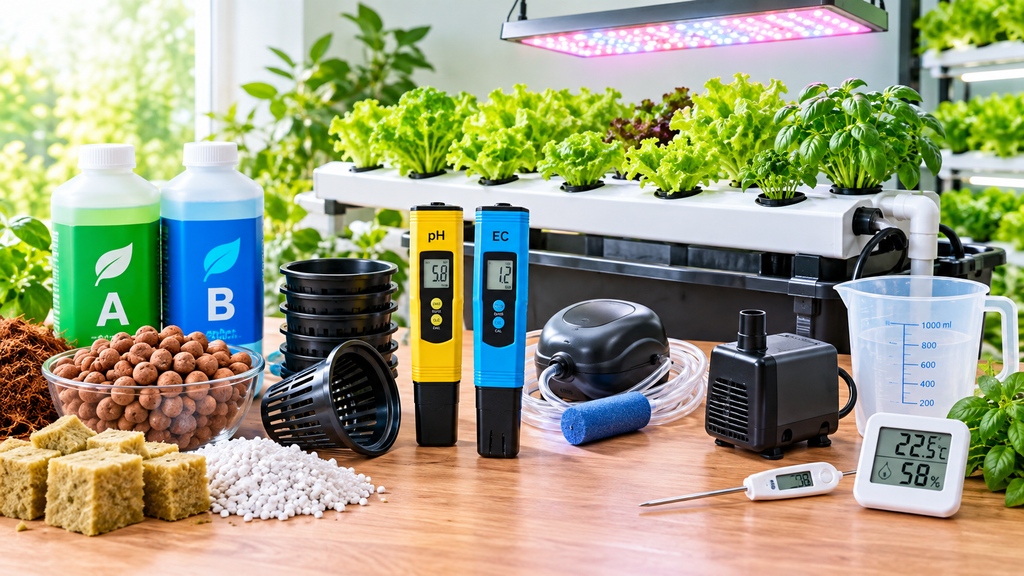
1. Hydroponic Growing System
The first thing you need is a suitable hydroponic growing system. The system provides a way to deliver water, nutrients, oxygen, and support to your plants.
Popular systems include:
- Deep Water Culture (DWC)
- Nutrient Film Technique (NFT)
- Dutch Bucket
- Drip systems
For beginners, a simple system that is easy to assemble and maintain can be a good starting point.
Recommended for: Beginners who want to start growing without traditional soil.
Check Hydroponic Systems on Amazon → https://link.amazon/B0bBfKIsR
2. Hydroponic Nutrients
Plants still need essential nutrients even though they are not growing in soil. Hydroponic nutrients provide minerals that plants need for healthy growth.
Common nutrients include nitrogen, phosphorus, potassium, calcium, and magnesium.
Different plants can have different nutrient requirements, so always follow the instructions provided with the nutrient product.
Recommended for: Almost every hydroponic growing system.
Check Hydroponic Nutrients on Amazon → https://link.amazon/B0eVVQs4q
3. pH Meter
pH is an important part of hydroponic growing because it affects how plants absorb nutrients from the water.
A digital pH meter allows you to check the nutrient solution more accurately than simply guessing.
Many hydroponic growers generally aim for a mildly acidic nutrient solution, often around pH 5.5–6.5, depending on the crop.
Tip: Calibrate your pH meter regularly according to the manufacturer’s instructions.
Check pH Meters on Amazon → https://link.amazon/B0hDsBu6P
4. EC Meter
An EC meter measures the electrical conductivity of your nutrient solution. It provides an indication of the concentration of dissolved nutrients.
EC requirements vary depending on the plant and its growth stage. Therefore, use crop-specific recommendations instead of maintaining the same EC level for every plant.
An EC meter can be especially useful when you want better control over your nutrient solution.
Check EC Meters on Amazon → https://link.amazon/B0fKYmUA3
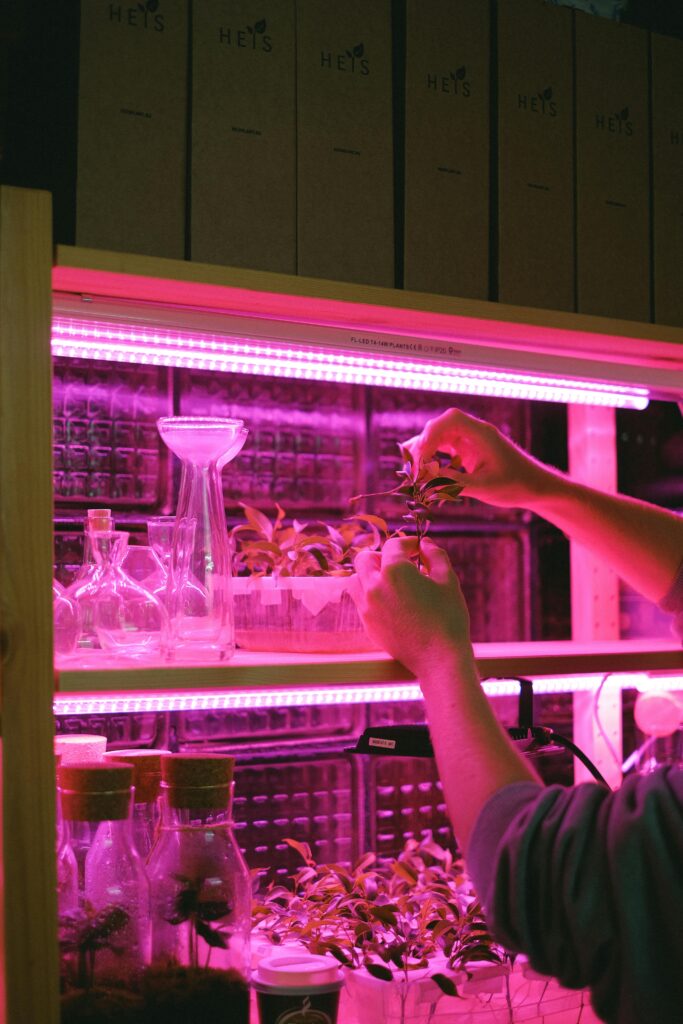
5. Grow Light
If you are growing indoors or your plants do not receive enough sunlight, a grow light can provide additional light.
LED grow lights are commonly used for indoor hydroponic gardens. When choosing a grow light, consider:
- Growing area
- Plant type
- Light intensity
- Energy consumption
- Mounting height
A suitable light can help plants receive the energy they need for photosynthesis.
Check Grow Lights on Amazon → https://link.amazon/B05UbDIe9
6. Air Pump and Air Stone
An air pump and air stone are particularly useful in systems such as Deep Water Culture.
The air pump pushes air through the air stone, creating bubbles in the nutrient solution. This helps provide oxygen to the water.
When choosing an air pump, consider the size of your reservoir and the requirements of your hydroponic system.
Check Air Pumps on Amazon → https://link.amazon/B0djxEH3o
7. Water Pump
Some hydroponic systems need a water pump to move nutrient solution from one location to another.
Water pumps are commonly used in NFT, Dutch Bucket, drip, and other recirculating systems.
Before purchasing a pump, check its flow rate and the height to which it needs to move the water. The correct pump depends on your system design.
Check Water Pumps on Amazon → https://link.amazon/B0b7rI9bX
8. Growing Medium
Hydroponics does not use traditional garden soil, but many systems still need a growing medium to support the plants.
Common growing media include:
- Coco coir
- Rockwool
- Clay pebbles
- Perlite
Each medium has different characteristics, so choose one that works well with your hydroponic system.
For example, clay pebbles are commonly used in several hydroponic systems because they provide plant support while allowing air and water to reach the roots.
Check Hydroponic Growing Media on Amazon → https://link.amazon/B0fR0PQUz
9. Net Pots
Net pots are small containers with openings that allow plant roots to grow through them.
They are commonly used with systems such as DWC and NFT.
Choose a net pot size that fits your growing system and the plants you want to grow.
Check Net Pots on Amazon → https://link.amazon/B09xieU37
10. Water and Temperature Monitoring Tools
Monitoring your water conditions can make hydroponic maintenance easier.
A simple thermometer can help you monitor the temperature of your nutrient solution. You can also use measuring containers and other basic tools when preparing nutrients.
Keeping track of your water conditions can help you identify potential problems before they become serious.
Check Hydroponic Monitoring Tools on Amazon → https://link.amazon/B07JAHvRI
What Hydroponic Supplies Do Beginners Really Need?
You do not need to purchase all 10 products immediately.
A basic beginner setup may include:
- A hydroponic growing system
- Hydroponic nutrients
- pH meter
- EC meter
- Growing medium
- Net pots
- Basic measuring and maintenance tools
If you are growing indoors, you may also need a suitable grow light.
If you are using a DWC system, an air pump and air stone may also be important.
The exact equipment depends on the type of hydroponic system you choose.
How to Choose the Right Hydroponic Supplies
Before buying equipment, consider these questions:
What plants do you want to grow?
Lettuce and herbs can have different requirements from tomatoes, cucumbers, or strawberries.
Where will you grow?
An indoor setup may require grow lights, while an outdoor system may receive enough natural sunlight.
What type of hydroponic system will you use?
The equipment required for NFT can be different from what you need for DWC or Dutch Bucket systems.
What is your budget?
Start with the essential equipment and add more monitoring tools as you gain experience.
Is the product compatible?
Always check the product specifications, dimensions, capacity, and compatibility with your hydroponic setup before purchasing.
Final Thoughts
Choosing the right hydroponic supplies for beginners does not have to be difficult. Start with a suitable growing system and purchase the equipment required for that system.
As you gain experience, you can add tools such as pH meters, EC meters, grow lights, pumps, and other monitoring equipment to improve your growing process.
At HydroSiti, we aim to provide practical hydroponic information and product recommendations to help beginners make better decisions.
Affiliate Disclosure: Some links in this article may be affiliate links. If you purchase a product through these links, HydroSiti may earn a small commission at no additional cost to you. Product availability, specifications, and prices may change, so always check the seller’s information before purchasing.