
Creating the Perfect Grow Space
A successful indoor farm starts with a well-planned growing space. When using Indoor Farming Using Hydroponic Technology Systems, your environment plays a major role in plant health. You do not need a huge building to create excellent growing conditions. Many growers begin with a spare room, basement, garage, or small greenhouse. The key is making the space clean, organized, and easy to manage.
Start by choosing a location with enough room for plants, equipment, and maintenance tasks. You should be able to move around comfortably without disturbing crops. Good airflow is also important because stagnant air can encourage plant diseases. Keeping your grow area tidy helps reduce pests and prevents unnecessary problems later.
Think about accessibility when planning your setup. Water reservoirs, pumps, and growing trays should be easy to reach. This makes regular inspections much simpler. You save time and effort when everything has a designated place. A well-designed grow space also allows you to expand your system in the future.
Another advantage of indoor farming is environmental control. Unlike outdoor gardens, you are not dependent on weather conditions. You create the ideal conditions for growth every day. This control is one reason many growers prefer Indoor Farming Using Hydroponic Technology Systems over traditional farming methods.
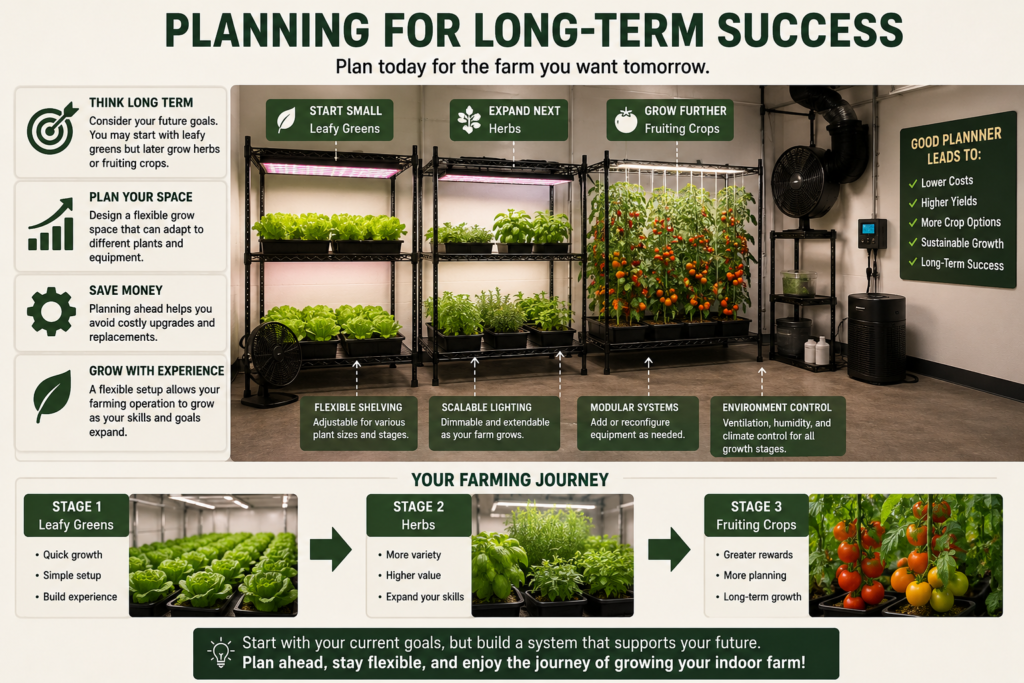
Planning for Long-Term Success
Before installing equipment, consider your future goals. You may start with leafy greens but later grow herbs or fruiting crops. Planning ahead helps you avoid costly upgrades. A flexible grow space can adapt as your farming experience grows.
Good organization improves productivity and reduces stress. When your equipment is arranged properly, daily maintenance becomes easier. Small improvements in layout can make a significant difference over time.
Lighting Technologies Explained
Light is one of the most important resources for indoor crops. Since sunlight is limited indoors, artificial lighting becomes essential. Modern lighting technologies make it possible to grow healthy plants throughout the year. Understanding these options helps you make better decisions for your hydroponic farm.
LED grow lights are the most popular choice today. They provide strong light while using less electricity. They also produce less heat than older lighting systems. This helps maintain stable growing conditions and reduces cooling costs. Many growers appreciate the energy savings that LEDs provide.
Different plants require different light levels. Leafy greens usually need moderate light intensity. Fruiting crops often need stronger lighting for maximum production. Adjusting light schedules can also improve growth. Most hydroponic crops thrive when they receive consistent daily light periods.
Light placement matters just as much as light quality. Lights positioned too high may reduce efficiency. Lights placed too close can stress plants. Finding the proper distance helps plants receive balanced coverage. Even light distribution supports uniform growth across the entire system.
Modern lighting systems often include timers and smart controls. These features automate daily schedules and improve consistency. Automation reduces manual work and helps maintain ideal growing conditions. This technology continues to make Indoor Farming Using Hydroponic Technology Systems more efficient and accessible.
Choosing the Right Lighting Setup
Your lighting choice depends on crop type, growing area, and budget. Energy-efficient systems often provide the best long-term value. Investing in quality lighting can improve yields while reducing operating expenses.
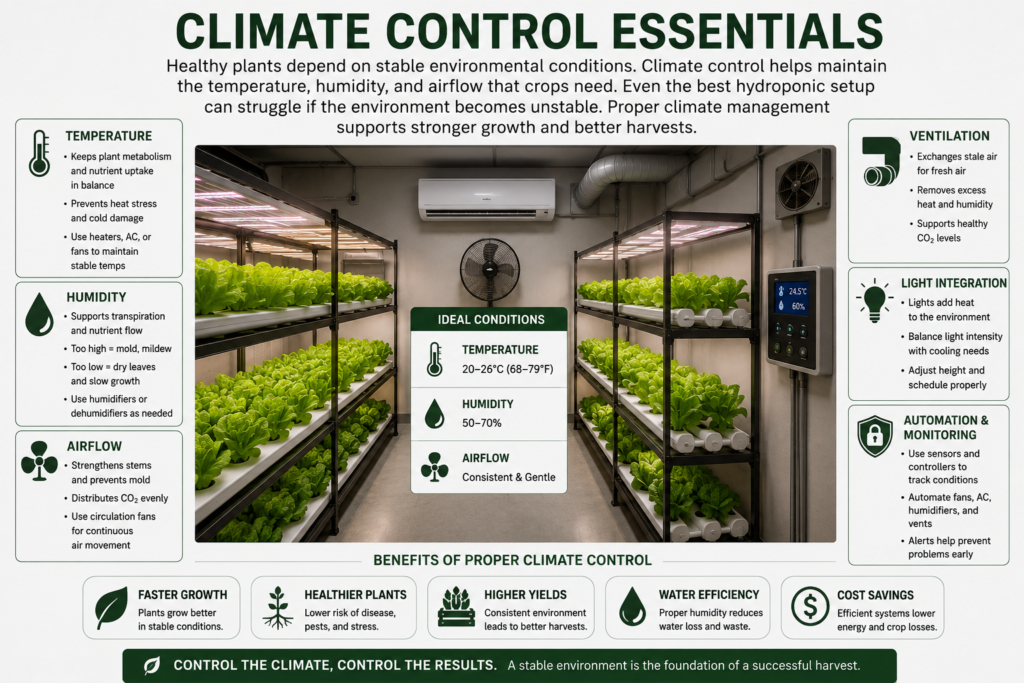
Climate Control Essentials
Healthy plants depend on stable environmental conditions. Climate control helps maintain the temperature, humidity, and airflow that crops need. Even the best hydroponic setup can struggle if the environment becomes unstable. Proper climate management supports stronger growth and better harvests.
Temperature is one of the first factors to monitor. Extreme heat can stress plants and reduce productivity. Cold conditions may slow growth and nutrient absorption. Maintaining a comfortable temperature range helps plants perform at their best.
Humidity levels are equally important. Excessive humidity can encourage mold and fungal diseases. Very low humidity may cause plants to lose moisture too quickly. Balancing humidity creates a healthier environment for both roots and leaves.
Air circulation is another essential component. Fans help move air throughout the growing area. This improves plant strength and prevents stagnant conditions. Good airflow also helps distribute heat and humidity more evenly.
Many indoor growers use automated climate control systems. Sensors monitor environmental conditions throughout the day. Equipment responds automatically when adjustments are needed. These systems improve consistency and reduce the need for constant monitoring.
Why Environmental Stability Matters
Plants respond well to predictable conditions. Sudden changes can slow growth and increase stress. Maintaining stability helps crops focus their energy on healthy development. Consistent conditions often lead to higher yields and better quality produce.
Increasing Year-Round Production
One of the biggest advantages of Indoor Farming Using Hydroponic Technology Systems is continuous production. Outdoor farms often face seasonal limitations. Indoor growers can maintain harvests throughout the entire year. This creates a steady supply of fresh produce regardless of weather conditions.
Year-round production begins with careful planning. Crop schedules should be organized to maximize available space. Staggering planting dates ensures that new crops replace harvested ones. This approach keeps your system productive without long gaps between harvests.
Reliable equipment also supports continuous production. Pumps, lights, and climate control systems should receive regular maintenance. Preventive care reduces unexpected failures and helps maintain smooth operation. Small maintenance tasks often prevent larger problems later.
Selecting suitable crops can further improve productivity. Fast-growing greens and herbs provide frequent harvest opportunities. Many growers combine different crops to create a balanced production schedule. This strategy helps maintain consistent output throughout the year.
Data tracking can also improve performance. Monitoring growth rates, harvest quantities, and environmental conditions reveals valuable insights. You can identify successful practices and make informed adjustments. Small improvements often add up to significant gains over time.
The ability to produce crops year-round makes hydroponic farming highly attractive. With proper planning, lighting, and climate management, you can enjoy consistent harvests. Indoor farming provides flexibility, efficiency, and greater control over production. These benefits continue to drive the popularity of modern hydroponic growing systems around the world.