When you grow plants hydroponically, choosing the Best Hydroponic Nutrients for Healthy Plant Growth is essential for healthy development. Unlike traditional gardening, hydroponics does not use soil to supply essential nutrients. Instead, you provide everything your plants need through a nutrient-rich water solution. The right nutrient balance helps your plants develop healthy leaves, strong roots, and better growth.
Among all essential plant nutrients, three deserve special attention: nitrogen, phosphorus, and potassium. These nutrients are commonly known as NPK. They support different stages of plant development and work together to maintain healthy growth. Understanding their individual roles helps you choose the Best Hydroponic Nutrients for Healthy Plant Growth for your garden.
You do not need advanced gardening knowledge to understand these nutrients. With a little practice, you can recognize their benefits and manage your nutrient solution confidently. Learning about the Best Hydroponic Nutrients for Healthy Plant Growth also helps you avoid common feeding mistakes and nutrient imbalances.
Let’s explore how each nutrient helps your hydroponic plants grow. Discover why the Best Hydroponic Nutrients for Healthy Plant Growth depend on the right combination of nitrogen, phosphorus, and potassium.
Nitrogen: The Secret Behind Healthy Green Leaves
Nitrogen is one of the most important nutrients for healthy plant development. It helps plants produce chlorophyll, which gives leaves their beautiful green colour. Chlorophyll also allows plants to capture sunlight and produce energy through photosynthesis.
When your hydroponic plants receive enough nitrogen, their leaves usually look green and healthy. Their stems also develop properly, supporting stronger vegetative growth. This makes nitrogen especially important during the early and active growing stages.
Imagine growing lettuce, spinach, or basil in your hydroponic garden. These leafy vegetables need sufficient nitrogen to develop fresh, healthy leaves. Without enough nitrogen, their growth may become slow and disappointing.
What happens when plants lack nitrogen?
Nitrogen deficiency usually appears through visible changes in plant leaves. Older leaves often become pale green or yellow first. This happens because nitrogen can move from older leaves towards newer growth.
You might also notice smaller leaves and slower plant development. Your plants may look weak compared with healthy plants. If the deficiency continues, overall growth and harvest quality can suffer.
However, yellow leaves do not always indicate nitrogen deficiency. Incorrect pH, damaged roots, and other nutrient problems can cause similar symptoms. Therefore, check your nutrient solution before adding extra nitrogen.
How can you maintain proper nitrogen levels?
Start by choosing a balanced hydroponic nutrient solution suitable for your plants. Follow the manufacturer’s mixing instructions instead of guessing the required amount. Different crops need different nutrient concentrations during their growing stages.
You should also observe your plants regularly. Healthy green leaves usually indicate good progress, although colour alone cannot confirm nutrient balance.
Remember that more nitrogen does not always mean faster growth. Excess nitrogen can produce excessive leafy growth and affect flowering. It may also disturb the balance between different essential nutrients.
Phosphorus: Supporting Strong Roots and Plant Development
Phosphorus is another essential nutrient that helps your plants develop properly. It plays an important role in energy transfer and various plant growth processes. Your plants need energy for root development, cell division, and healthy development.
In hydroponic gardening, strong roots are especially important. Roots absorb water and essential nutrients directly from the nutrient solution. Healthy roots help plants establish themselves and support continued growth.
Phosphorus also supports early plant development. During the seedling stage, young plants need healthy roots to establish successfully. Proper phosphorus availability helps support this important development process.
Why is phosphorus important for root growth?
Think about your hydroponic plants as having two important parts. The leaves grow above the growing medium, while roots develop underneath. Both parts need proper care to keep your plants healthy.
Phosphorus supports root development and helps plants manage energy. Strong roots allow plants to explore more of their growing environment. They also help maintain efficient water and nutrient absorption.
Phosphorus becomes particularly important when plants enter reproductive development. It supports flowering, seed formation, and fruit development. However, adding extra phosphorus does not automatically produce bigger fruits.
Your plants need balanced nutrition throughout their growing cycle. Proper nutrient management matters more than increasing one nutrient unnecessarily.
What are the common signs of phosphorus deficiency?
Phosphorus deficiency can be difficult to recognize in hydroponic plants. Some plants develop slow growth and smaller leaves. Older leaves may also develop dark green or purplish colours.
You might notice weak root development and delayed maturity. Some plants may produce fewer flowers or experience poor development. These symptoms can vary depending on the crop and growing conditions.
Before correcting the problem, check your nutrient solution carefully. Incorrect pH can prevent plants from absorbing available phosphorus. Cold root conditions can also reduce phosphorus uptake.
How can you support phosphorus availability?
Choose a complete nutrient formula containing sufficient phosphorus for your crops. Maintain suitable pH levels to support nutrient absorption. Also, keep your nutrient solution within the recommended temperature range.
Avoid adding extra phosphorus without identifying the actual problem. Too much phosphorus can interfere with other nutrient balances. A balanced approach helps your plants develop healthier roots and stronger growth.
“Nourish Your Plants, Grow Healthier & Stronger”
NPK nutrients help hydroponic plants develop healthy green leaves, strong roots, and better overall growth.
Potassium: Helping Plants Stay Strong and Healthy
Potassium is the third major nutrient in the NPK group. It supports several important processes inside your hydroponic plants. These include water regulation, enzyme activity, and overall plant development.
Unlike nitrogen, potassium does not directly build chlorophyll. Instead, it helps plants use water efficiently and maintain healthy functions. It also supports the movement of sugars throughout plant tissues.
Think of potassium as a helper that keeps your plants working properly. It supports their ability to manage changing environmental conditions. This makes potassium important throughout the growing cycle.
How does potassium improve plant health?
Potassium helps regulate water movement through plant cells. This process supports proper water balance and healthy plant structure. It also helps plants maintain normal growth during environmental stress.
For fruiting crops, potassium plays an important supporting role. Tomatoes, peppers, and cucumbers need balanced potassium nutrition. It supports fruit development, sugar movement, and overall plant quality.
However, potassium alone cannot guarantee larger or sweeter fruits. Plants also require nitrogen, phosphorus, calcium, magnesium, and other nutrients. Balanced nutrition helps maintain healthy development across different growth stages.
What happens when plants lack potassium?
Potassium deficiency often appears through changes in older leaves. You may notice yellowing or browning along the leaf edges. Some leaves may develop dry patches or curled edges.
Plants experiencing potassium deficiency may also show weaker stems. Their growth can become slower, and fruit development may suffer. These symptoms deserve attention before the problem becomes severe.
However, similar symptoms can result from other problems. Incorrect EC, root damage, and nutrient imbalance may also affect leaves. Check the growing conditions before changing your nutrient formula.
How can you maintain healthy potassium levels?
Use a hydroponic nutrient solution designed for your chosen crops. Check its recommended application rate and follow the instructions carefully. Avoid adding separate potassium products without understanding your existing nutrient levels.
Regularly monitor your plants and nutrient solution. Pay attention to leaf colour, plant structure, and overall development. These observations can help you identify problems earlier.
Why Your Plants Need a Balanced NPK Combination
Nitrogen, phosphorus, and potassium each perform different functions. However, your plants need all three nutrients to grow successfully. Focusing on only one nutrient can create unwanted imbalances.
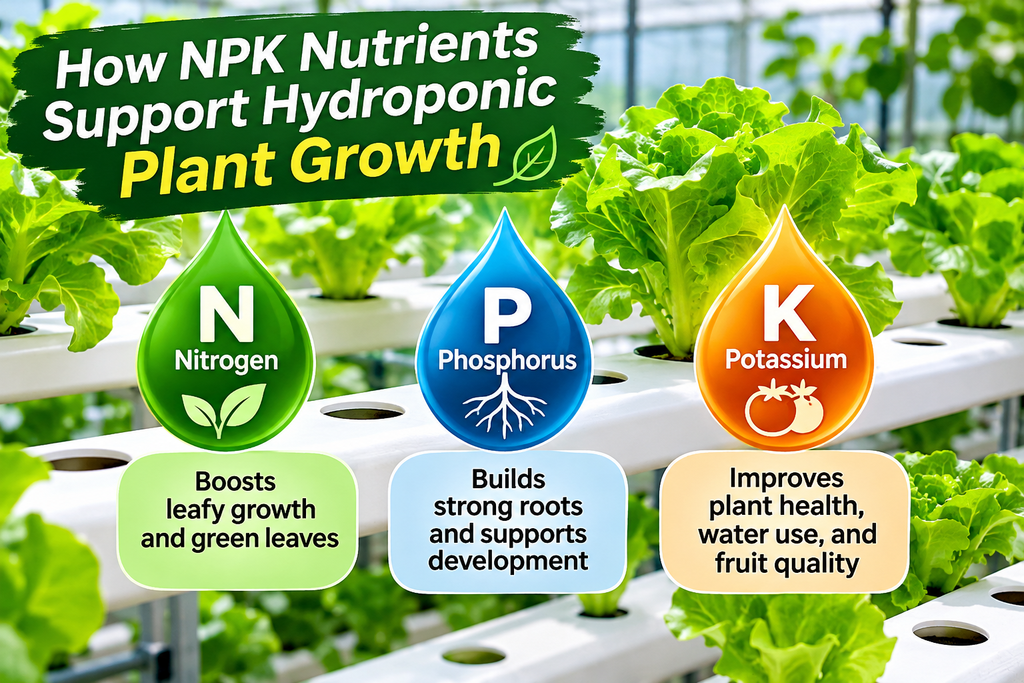
Nitrogen supports leafy growth and chlorophyll production. Phosphorus helps with energy transfer and root development. Potassium supports water regulation and several essential plant processes.
Together, these nutrients create a strong foundation for plant development. They are important when choosing the Best Hydroponic Nutrients for Healthy Plant Growth.
Understanding NPK ratios
You will often see three numbers printed on nutrient product labels. These numbers represent nitrogen, phosphorus, and potassium content. They are commonly written as N-P-K ratios.
For example, a nutrient formula might display 10-5-15. This indicates its relative nitrogen, phosphorus, and potassium composition. These numbers help you compare different nutrient formulations.
However, one NPK ratio does not suit every plant. Leafy vegetables and fruiting crops have different nutritional requirements. Their needs can also change throughout their growing cycles.
Therefore, choose nutrients according to your crop and growth stage. Follow the product instructions and avoid unnecessary nutrient adjustments.
Practical tips for maintaining NPK balance
Here are some simple habits that can improve your hydroponic nutrient management:
- Choose a complete nutrient solution suitable for your plants.
- Follow the recommended mixing instructions carefully.
- Check nutrient strength using an EC meter.
- Monitor pH regularly to support nutrient absorption.
- Observe leaves for unusual colours or growth changes.
- Maintain healthy roots and proper water circulation.
- Replace nutrient solutions according to your system requirements.
- Avoid mixing concentrated nutrient products directly together.
These habits can help you avoid many common growing mistakes. You will also become more confident when managing your hydroponic garden.
Final Thoughts
Nitrogen, phosphorus, and potassium are essential building blocks of hydroponic plant nutrition. Each nutrient supports different functions throughout the plant’s growing cycle.
Nitrogen helps develop healthy green leaves and vegetative growth. Phosphorus supports energy transfer, root development, and reproduction. Potassium helps regulate water movement and supports overall plant health.
When you understand these three nutrients, managing hydroponic plants becomes much easier. You can make better decisions about nutrient selection and plant care.
Remember, healthy plants need balanced nutrition rather than excessive feeding. Start with a suitable nutrient solution and monitor your plants regularly. With patience and consistent care, you can enjoy healthier plants and more rewarding harvests.
Your hydroponic gardening journey becomes much more enjoyable when you understand what your plants actually need!