Hydroponic Nutrients for Healthy Plant Growth are essential for developing strong roots, healthy leaves, and better plant production. In hydroponic gardening, plants receive nutrients directly through water instead of getting them from soil.
Understanding Hydroponic Nutrients for Healthy Plant Growth helps beginners choose the right nutrient balance, maintain proper pH levels, and grow healthier plants throughout the growing season.
Have you ever wondered why some hydroponic plants grow quickly while others struggle? The answer often lies in their nutrient supply. Plants need different minerals to develop strong roots, healthy leaves, and beautiful fruits. Even a small nutrient imbalance can affect their growth.
Choosing the right nutrients helps your plants reach their full potential. The Best Hydroponic Nutrients for Healthy Plant Growth provide a balanced combination of essential elements. These nutrients support every stage of plant development. Let’s explore what your plants need and how each nutrient helps them grow.
1. Why Do Hydroponic Plants Need Essential Nutrients?
Plants need nutrients just like humans need food for energy and development. In natural soil, plant roots absorb minerals from their surroundings. However, hydroponic systems use nutrient-rich water instead of soil. This means you must supply all necessary nutrients through the water.
Essential nutrients support several important plant functions. They help leaves produce energy through photosynthesis. They also support root development, flowering, and fruit production. Without proper nutrition, plants cannot maintain healthy growth.
Think of nutrients as the building blocks of your hydroponic garden. Each element performs a different job. Some nutrients encourage leafy growth, while others strengthen roots and support flowering.
Your plants also need nutrients in the correct amounts. Adding more fertilizer does not always produce better results. Excess nutrients can damage roots and prevent proper mineral absorption. A balanced nutrient solution gives your plants what they need without unnecessary stress.
When selecting nutrients, consider your plant varieties and growing stages. Lettuce and spinach have different nutritional needs from tomatoes and peppers. Understanding these differences helps you manage your hydroponic garden more effectively.
2. Understanding Macronutrients: The Main Building Blocks
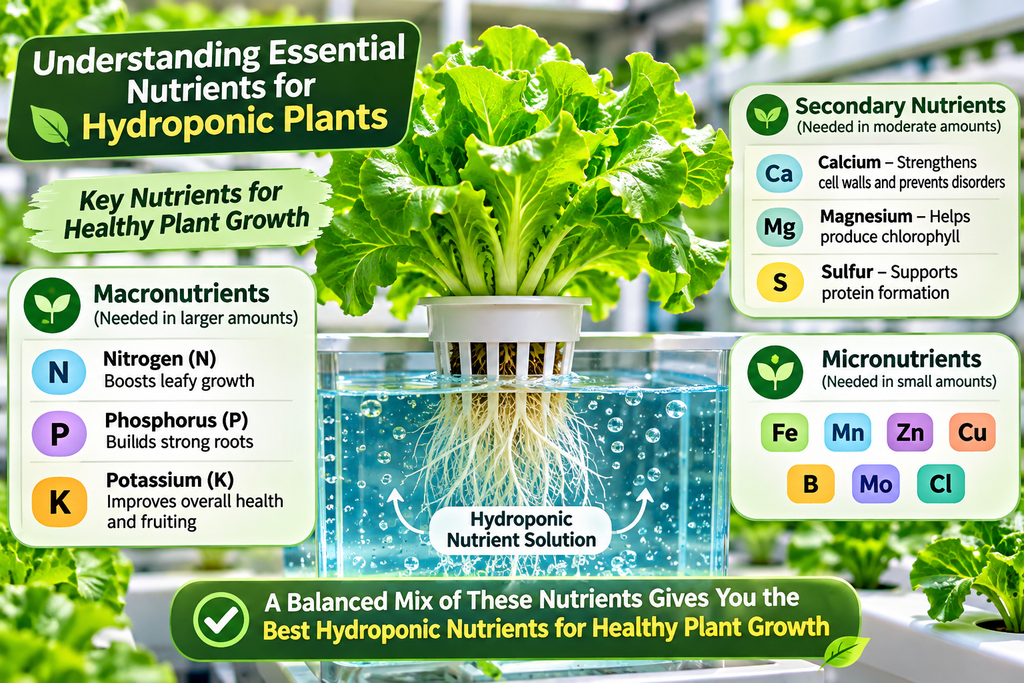
Macronutrients are nutrients that plants require in relatively large amounts. They play major roles in plant development and overall health. Three important macronutrients are nitrogen, phosphorus, and potassium.
You will often see these nutrients listed as NPK on fertilizer labels. Each number represents the percentage of nitrogen, phosphorus, and potassium. Understanding these numbers helps you choose suitable hydroponic nutrients.
Nitrogen (N): Supporting Healthy Leaf Growth
Nitrogen is essential for developing healthy green leaves. It also supports chlorophyll production, which helps plants absorb sunlight. Chlorophyll allows plants to produce energy through photosynthesis.
When your plants receive enough nitrogen, their leaves usually develop a healthy green appearance. They also produce new shoots and foliage during vegetative growth.
However, too much nitrogen can create problems. Plants may develop excessive leafy growth with weaker stems. Fruiting plants might also experience delayed flowering.
Yellowing older leaves can indicate nitrogen deficiency. If you notice this problem, check your nutrient solution before adding more fertilizer. Other growing conditions can also cause similar symptoms.
Phosphorus (P): Building Strong Roots
Phosphorus supports healthy root development and energy transfer. It helps plants manage important processes during growth. This nutrient also contributes to flowering and seed development.
Strong roots help your hydroponic plants absorb water and minerals efficiently. This becomes especially important during early plant development.
When phosphorus levels become too low, plants may grow slowly. Their leaves might develop unusual dark green or purplish colours. Root development can also become weaker.
You should maintain balanced phosphorus levels throughout plant development. Avoid adding extra phosphorus without checking your nutrient requirements.
Potassium (K): Improving Overall Plant Health
Potassium supports several important functions inside plant cells. It helps regulate water movement and supports enzyme activity. It also contributes to healthy flowering and fruit development.
Plants receiving sufficient potassium often develop stronger stems. They can also manage environmental stress more effectively.
Potassium deficiency may cause yellow or brown leaf edges. Older leaves often show symptoms before younger leaves. Poor fruit development can also indicate an imbalance.
Maintaining suitable potassium levels helps your plants remain healthy. It also supports better growth throughout different development stages.
Grow Better. Grow Smarter.
Discover how balanced hydroponic nutrients support stronger roots, greener leaves, and healthier plant growth. Give your plants the essential nutrition they need to thrive.
3. Secondary Nutrients: Small Details That Matter
Besides NPK, hydroponic plants require several secondary nutrients. These nutrients are needed in smaller amounts than primary macronutrients. However, they remain essential for healthy plant development.
Three important secondary nutrients include calcium, magnesium, and sulfur. Each one performs specific functions within your plants.
Calcium: Supporting Strong Cell Walls
Calcium helps plants build strong cell walls and healthy tissues. It also supports proper root and new leaf development.
Tomatoes and peppers need particular attention during fruit development. Insufficient calcium can contribute to blossom-end rot. You may notice dark, sunken patches near the bottom of fruits.
Calcium problems sometimes occur because of poor water movement. Irregular watering and environmental stress can affect calcium transport. Therefore, check your growing conditions alongside nutrient levels.
Magnesium: Helping Plants Produce Energy
Magnesium plays an important role in chlorophyll production. It helps plants capture sunlight and perform photosynthesis.
Without sufficient magnesium, older leaves may develop yellow areas between their veins. The veins can remain green while surrounding tissues become pale.
Leafy vegetables need healthy magnesium levels for proper development. Maintaining balanced nutrients helps prevent common magnesium-related problems.
Sulfur: Supporting Protein Formation
Sulfur helps plants produce proteins and certain important enzymes. It also contributes to healthy plant metabolism.
A sulfur deficiency may cause younger leaves to become pale or yellow. Growth can become slow when sulfur availability remains low.
Although plants require relatively small amounts, sulfur remains important. A complete hydroponic nutrient formula usually supplies this element.
4. Micronutrients: Tiny Elements With Important Jobs
Micronutrients are required in very small quantities. However, their importance should never be underestimated. Even tiny shortages can affect plant health and productivity.
The main hydroponic micronutrients include iron, manganese, zinc, copper, boron, molybdenum, and chlorine.
Here is how some important micronutrients support your plants:
- Iron: Helps chlorophyll formation and healthy leaf colour.
- Manganese: Supports photosynthesis and several enzyme activities.
- Zinc: Helps regulate growth and enzyme functions.
- Copper: Supports plant metabolism and reproductive development.
- Boron: Helps with cell development and flowering.
- Molybdenum: Supports nitrogen metabolism inside plants.
- Chlorine: Helps maintain water balance and photosynthesis.
Iron deserves special attention in hydroponic gardening. Iron deficiency often causes yellowing in younger leaves. The leaf veins may remain green while surrounding areas turn pale.
The availability of micronutrients also depends on nutrient solution pH. Incorrect pH can make certain minerals difficult for plants to absorb. Therefore, maintaining suitable pH levels is essential.
5. How to Choose Balanced Nutrients for Your Hydroponic Garden
Now you understand the different nutrients your plants require. The next step is choosing a suitable nutrient formula for your growing system.
Start by identifying the plants you want to grow. Leafy vegetables, herbs, and fruiting crops have different nutritional requirements. A nutrient formula suitable for lettuce might not provide the ideal balance for tomatoes.
Look for a complete hydroponic fertilizer containing primary, secondary, and essential micronutrients. Check the product label carefully before preparing your nutrient solution.
Many hydroponic fertilizers come in two or three separate parts. These formulas help keep certain minerals stable during storage. Always follow the manufacturer’s mixing instructions.
Never mix concentrated nutrient products directly together unless the manufacturer specifically instructs you. Some ingredients can react and form unwanted deposits. Instead, add each component separately to your water.
You should also monitor your nutrient solution regularly. An EC meter helps you measure overall nutrient concentration. A pH meter helps you check nutrient availability conditions.
Remember that more fertilizer does not mean healthier plants. Your goal is to provide balanced nutrition rather than maximum nutrient concentration.
Final Thoughts
Understanding essential nutrients gives you a stronger foundation for successful hydroponic gardening. Every nutrient has a specific responsibility in plant development. Nitrogen supports leaves, phosphorus encourages healthy roots, and potassium improves overall plant functions.
Secondary nutrients and micronutrients complete the nutritional picture. Together, they support healthy roots, strong leaves, flowering, and fruit development.
You do not need to become a gardening expert overnight. Start with a complete nutrient formula and learn how your plants respond. Monitor pH and EC, observe leaf colour, and make adjustments carefully.
With the right knowledge and consistent care, you can create a healthier growing environment. Choosing the Best Hydroponic Nutrients for Healthy Plant Growth becomes much easier when you understand what your plants actually need.