
Calcium Magnesium and Sulfur in Hydroponics play important roles in maintaining healthy plant growth. Your plants need more than nitrogen, phosphorus, and potassium to grow successfully. These three secondary nutrients support strong roots, healthy leaves, sturdy stems, and essential plant processes.
Although plants require smaller amounts of these nutrients, their importance should never be overlooked. A shortage of any one nutrient can affect overall plant development. You might notice yellow leaves, weak stems, slow growth, or poor root development.
Understanding Calcium Magnesium and Sulfur in Hydroponics helps you maintain a balanced growing environment. It also helps you choose the best hydroponic nutrients for healthy plant growth. Each nutrient performs a different job, and your plants need all three in suitable amounts.
Let’s explore why Calcium Magnesium and Sulfur in Hydroponics matter. You’ll also learn how to recognise deficiencies and maintain proper nutrient levels in your hydroponic system.
1. Calcium: Building Strong Roots, Stems, and Leaves
Calcium is one of the most important nutrients for healthy plant development. It helps build strong cell walls and supports new plant growth. Think of calcium as the building material that keeps your plants firm and healthy.
When your plants receive enough calcium, their leaves and stems develop properly. It also supports healthy root tips and growing points. These areas need a steady calcium supply to develop correctly.
Calcium is especially important for young leaves and developing fruits. Without enough calcium, new leaves may become distorted or develop brown spots. In some cases, growing tips may stop developing.
You may also notice blossom end rot in tomatoes and peppers. This problem appears as dark, sunken patches on the bottom of fruits. Calcium deficiency can contribute to this condition.
However, low calcium levels are not always the main problem. Irregular watering and poor nutrient movement can also cause symptoms. Therefore, you should check your entire growing environment before making changes.
How to Maintain Proper Calcium Levels
You can support healthy calcium absorption with a few simple practices:
- Use a complete hydroponic nutrient solution containing calcium.
- Maintain a suitable pH level for your chosen crops.
- Keep water circulation consistent throughout your system.
- Avoid excessive concentrations of competing nutrients.
- Check new leaves regularly for unusual growth patterns.
Remember that calcium moves mainly through water inside the plant. Consistent water movement helps deliver calcium to developing tissues. Good root health also supports better nutrient absorption.
2. Magnesium: The Secret Behind Healthy Green Leaves
Have you ever wondered why healthy plant leaves look beautifully green? Magnesium plays a major role in creating that natural green colour. It sits at the centre of every chlorophyll molecule.
Chlorophyll allows plants to capture sunlight for photosynthesis. This process converts light energy into chemical energy for plant growth. Without enough magnesium, plants cannot maintain normal chlorophyll production.
Magnesium also supports several important enzyme activities inside plants. These activities help plants process energy and use nutrients efficiently. As a result, magnesium contributes to healthy growth and development.
A magnesium deficiency often appears first on older leaves. You may notice yellow areas between the green leaf veins. This condition is commonly called interveinal chlorosis.
If the deficiency becomes severe, leaves may develop brown patches. Growth can also slow down as the problem continues. Recognising these signs early helps you protect your plants.
Simple Ways to Manage Magnesium in Hydroponics
You can maintain healthy magnesium levels through proper nutrient management.
- Choose nutrient formulas containing sufficient magnesium.
- Monitor older leaves for yellowing between the veins.
- Maintain suitable pH levels for nutrient availability.
- Check EC readings before adjusting nutrient concentrations.
- Avoid adding extra nutrients without checking existing levels.
Magnesium deficiency can sometimes result from nutrient imbalance. Excessive potassium or calcium may interfere with magnesium uptake. Therefore, adding more magnesium without checking other nutrients may not solve the problem.
Epsom salt, also called magnesium sulfate, supplies magnesium and sulfur. However, you should only use it when your nutrient calculations show a need. Too much supplementation can disturb your nutrient balance.
Calcium, Magnesium & Sulfur in Hydroponics.
Discover how calcium, magnesium, and sulfur support strong roots, healthy green leaves, and better hydroponic plant growth.
3. Sulfur: Supporting Protein Formation and Plant Development
Sulfur may receive less attention than other plant nutrients. However, it performs several important jobs inside your hydroponic garden. Your plants need sulfur to produce certain amino acids and proteins.
These compounds support plant growth, tissue development, and natural metabolic activities. Sulfur also contributes to the production of important plant compounds. It helps maintain healthy leaves and supports normal development.
Unlike magnesium, sulfur deficiency usually appears first on younger leaves. You may notice pale green or yellow leaves across the plant. Growth may also become slower when sulfur levels remain low.
This symptom can sometimes look similar to nitrogen deficiency. However, nitrogen deficiency generally affects older leaves first. Checking which leaves show symptoms can help you identify possible problems.
Sulfur also contributes to the formation of certain flavour compounds. This is particularly interesting when growing crops like onions and garlic. These compounds help create their characteristic flavours and aromas.
How to Keep Sulfur Levels Balanced
Maintaining sulfur levels is usually straightforward with complete hydroponic nutrients.
- Select a nutrient formula containing an appropriate sulfur source.
- Check nutrient labels before combining different products.
- Monitor younger leaves for unusual yellowing.
- Avoid unnecessary supplementation with individual nutrient products.
- Maintain balanced nutrient concentrations throughout the growing cycle.
Many hydroponic nutrient formulas provide sulfur through magnesium sulfate. Some formulas also contain potassium sulfate. These ingredients supply sulfur while contributing other essential nutrients.
Always check your nutrient product’s composition before adding supplements. This prevents unnecessary nutrient accumulation in your reservoir.
4. How Calcium, Magnesium, and Sulfur Work Together
Calcium, magnesium, and sulfur each perform different functions. However, your plants need all three for balanced development. Think of them as a small team working behind the scenes.
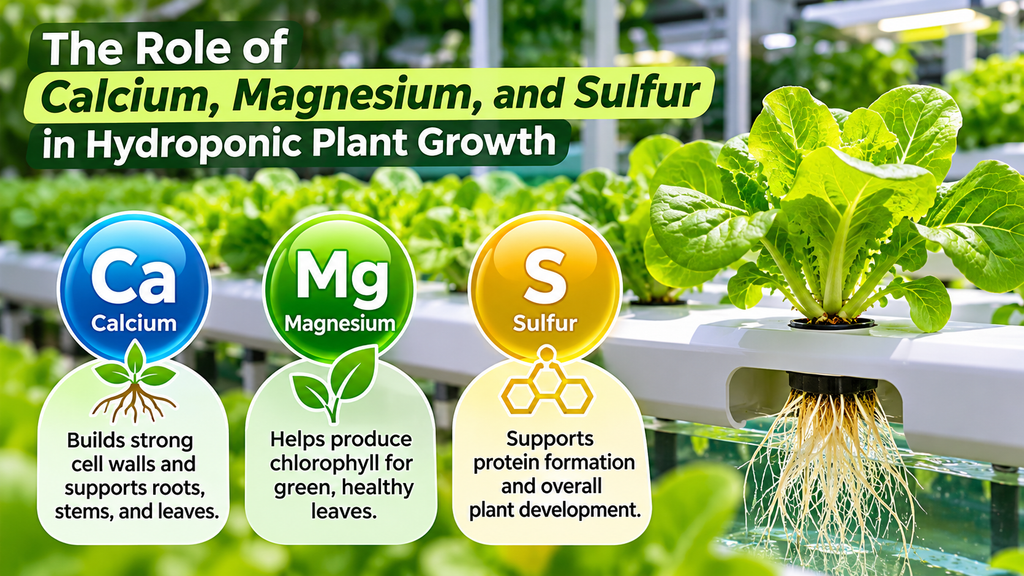
Calcium supports strong cell walls and developing tissues. Magnesium helps plants capture sunlight and produce energy. Sulfur supports protein formation and important metabolic processes.
A shortage of any one nutrient can affect plant performance. However, adding too much of another nutrient can create problems. Maintaining the right balance is more important than simply increasing nutrient strength.
You should also remember that nutrient availability depends on several factors. Water quality, pH, temperature, and root health all matter. Even a complete nutrient formula cannot solve every growing problem.
Practical Tips for Better Nutrient Management
Here are some useful habits to develop in your hydroponic garden:
- Check your nutrient solution regularly using reliable testing equipment.
- Monitor pH to support proper nutrient availability.
- Measure EC to understand the total dissolved nutrient concentration.
- Observe new and old leaves for different deficiency symptoms.
- Maintain healthy roots through proper oxygenation and water circulation.
- Replace or refresh nutrient solutions according to your system’s needs.
Keep simple notes about your nutrient readings and plant appearance. These records help you recognise patterns over time. You will also find it easier to correct problems before they become serious.
Final Thoughts
Calcium, magnesium, and sulfur may not always receive attention from beginners. However, they are essential parts of a healthy hydroponic nutrient programme.
Calcium helps build strong plant structures and supports new growth. Magnesium keeps leaves green and supports photosynthesis. Sulfur contributes to protein formation and healthy plant development.
When you understand their individual roles, nutrient management becomes much easier. You can recognise deficiency symptoms and make better growing decisions. Most importantly, you can maintain a balanced environment for your crops.
Remember, the best hydroponic nutrients for healthy plant growth are not simply about choosing a popular formula. They are about providing the right nutrients in suitable amounts. With regular monitoring and proper care, you can enjoy healthier plants and more productive hydroponic gardens.