
Fast-Growing Leafy Greens
When exploring the Best Crops for Hydroponic Technology Systems, leafy greens often become the first choice. They grow quickly, require little space, and produce reliable harvests throughout the year. If you are new to hydroponics, leafy greens can help you build confidence while learning how your system works.
Lettuce is one of the most popular options because it grows fast and adapts well to different hydroponic setups. Many varieties are ready for harvest within a few weeks. You can enjoy fresh salads regularly without waiting for long growing cycles. Spinach is another excellent choice that delivers nutritious leaves and performs well in controlled environments.
Kale has also gained popularity among hydroponic growers. It grows steadily and continues producing leaves for extended periods. You can harvest outer leaves while allowing the plant to keep growing. This method provides a continuous supply of fresh greens.
Swiss chard and arugula are also worth considering. They offer unique flavors and can grow efficiently in hydroponic systems. Since leafy greens generally have shallow root systems, they fit perfectly into many hydroponic designs. Their rapid growth makes them rewarding crops for both beginners and experienced growers.
Why Leafy Greens Are Ideal
Leafy greens require fewer nutrients than many fruiting plants. They also mature faster, reducing the time between planting and harvest. This quick turnaround allows you to experiment with different varieties and improve your growing skills. For anyone researching the Best Crops for Hydroponic Technology Systems, leafy greens remain a dependable starting point.
Productive Fruiting Plants
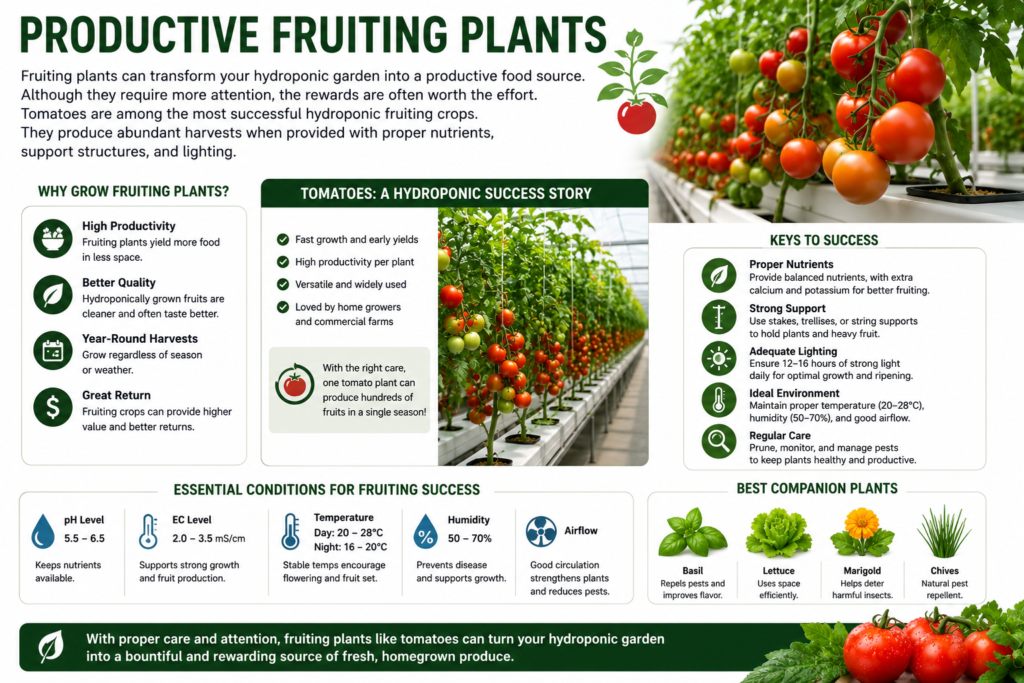
Fruiting plants can transform your hydroponic garden into a productive food source. Although they require more attention, the rewards are often worth the effort. Tomatoes are among the most successful hydroponic fruiting crops. They produce abundant harvests when provided with proper nutrients, support structures, and lighting.
Cherry tomatoes are especially popular because they grow vigorously and yield large numbers of fruits. You can harvest fresh tomatoes regularly during the growing season. Peppers are another productive option. Sweet peppers and hot peppers both perform well in hydroponic environments when temperatures remain stable.
Cucumbers also thrive in many hydroponic systems. They grow rapidly and can produce a steady supply of crisp fruits. Their vines require support, but the harvest can be impressive. Strawberries are another exciting choice for growers seeking something different. Fresh hydroponic strawberries offer excellent flavor and can be grown indoors throughout much of the year.
Getting Better Yields From Fruiting Plants
Fruiting plants need stronger lighting and more nutrients than leafy greens. Regular monitoring helps maintain healthy growth and consistent production. Pollination may also be necessary for some indoor setups. With proper care, these crops can become some of the Best Crops for Hydroponic Technology Systems due to their impressive yields and high value.
Herbs That Thrive Indoors
Herbs are among the easiest and most rewarding crops you can grow hydroponically. They require limited space and provide fresh flavors for your kitchen. Basil often tops the list because it grows quickly and responds exceptionally well to hydroponic conditions.
Fresh basil can be harvested repeatedly, making it a favorite among indoor gardeners. Mint is another excellent choice. It grows vigorously and produces fragrant leaves throughout the year. Since mint can spread aggressively in soil gardens, hydroponics offers better control over its growth.
Parsley is a reliable herb that adapts well to indoor environments. It provides steady harvests and works beautifully in many recipes. Cilantro can also thrive when temperatures remain moderate. Its fresh flavor makes it a valuable addition to home-grown herb collections.
Chives and oregano are additional herbs that perform well in hydroponic systems. They require minimal maintenance while producing flavorful harvests. Many growers appreciate herbs because they mature quickly and offer immediate benefits in daily cooking.
The Benefits of Growing Hydroponic Herbs
Indoor herbs provide fresh ingredients regardless of outdoor weather conditions. You can harvest exactly what you need while reducing food waste. Their compact size makes them perfect for small hydroponic systems. For many growers, herbs represent some of the Best Crops for Hydroponic Technology Systems due to their convenience and consistent performance.
Crops Beginners Should Avoid
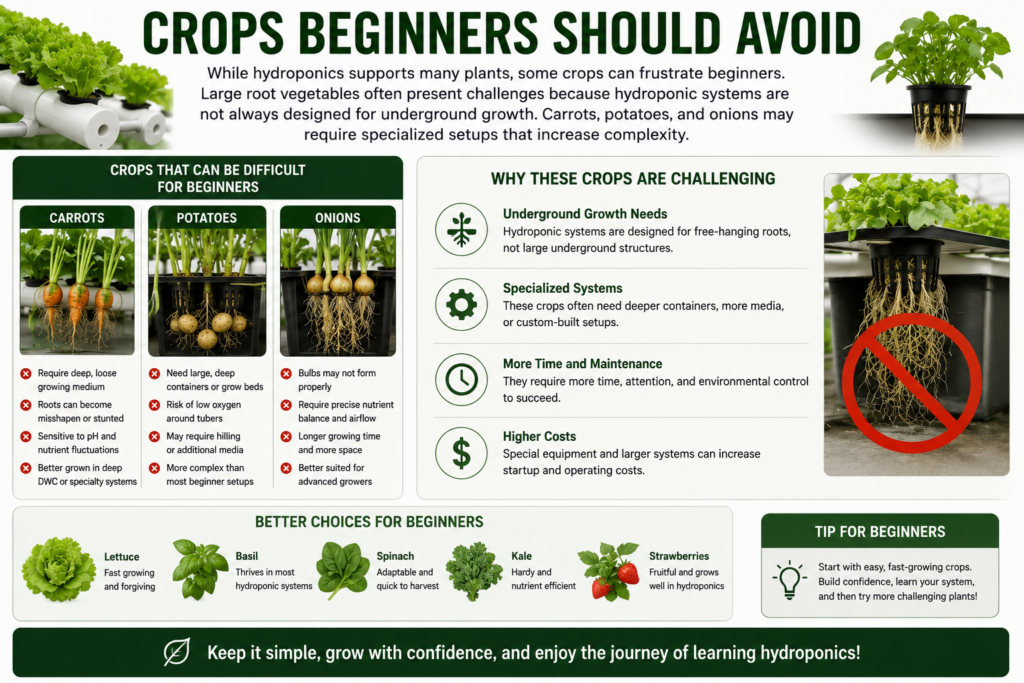
While hydroponics supports many plants, some crops can frustrate beginners. Large root vegetables often present challenges because hydroponic systems are not always designed for underground growth. Carrots, potatoes, and onions may require specialized setups that increase complexity.
Large fruiting plants can also be difficult for new growers. Watermelons and pumpkins need significant space, strong support systems, and extensive nutrient management. Their size often exceeds the capabilities of beginner-friendly hydroponic setups.
Corn can be another challenging crop. It requires substantial room, high nutrient levels, and effective pollination. These factors make it less suitable for those learning hydroponic basics. Certain fruit trees also demand long growing periods and advanced environmental control.
Starting with difficult crops may lead to disappointment and unnecessary expenses. Instead, focus on crops that provide quick results and manageable care requirements. Once you gain experience, you can gradually experiment with more demanding plants.
Start Simple and Grow Your Skills
Success in hydroponics often comes from choosing the right crops from the beginning. Fast-growing greens, productive fruiting plants, and easy herbs help you learn valuable techniques. As your confidence grows, you can explore more advanced options. By selecting the Best Crops for Hydroponic Technology Systems, you create a smoother path toward consistent harvests and long-term gardening success.