
Understanding the Basics
Hydroponic Technology are a modern farming method that allows plants to grow without soil. Instead, plants receive water, nutrients, and oxygen directly to their roots. This beginner’s guide explains how hydroponic systems work, their main types, benefits, and how you can start using them at home or on a small farm.
The roots absorb everything they need directly from the water. This process helps plants grow faster and often healthier than traditional gardening. Because nutrients are delivered directly to the roots, plants spend less energy searching for food.
One reason many people enjoy hydroponics is the ability to grow plants almost anywhere. You can set up a small system indoors, in a greenhouse, or even in a spare room. This flexibility makes hydroponics attractive for beginners and experienced growers alike.
As you explore this Beginner’s Guide to Hydroponic Technology Systems for Faster Growth, remember that success comes from understanding simple principles. Plants still need water, nutrients, light, and oxygen. Hydroponic systems simply provide these essentials in a more controlled way.
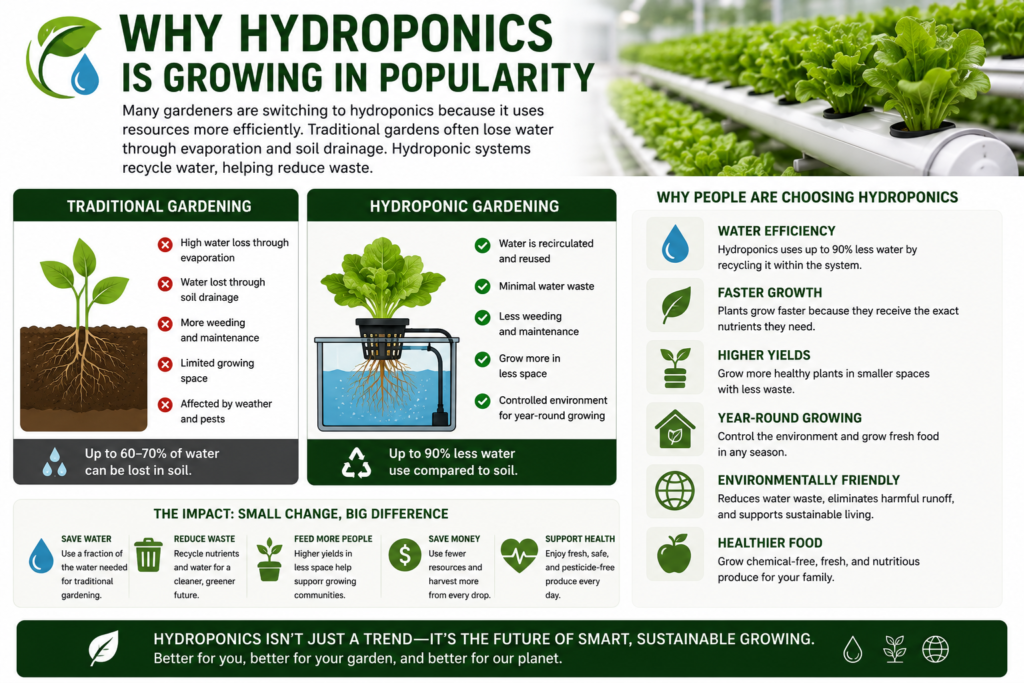
Why Hydroponics Is Growing in Popularity
Many gardeners are switching to hydroponics because it uses resources more efficiently. Traditional gardens often lose water through evaporation and soil drainage. Hydroponic systems recycle water, helping reduce waste.
Another advantage is faster growth. Plants can focus on developing leaves, stems, and fruits instead of searching for nutrients. This often leads to quicker harvests and better yields.
You also gain greater control over the growing environment. This control can help reduce common gardening challenges such as poor soil quality and unpredictable weather conditions.
Choosing the Right Setup
One of the most important steps is selecting a hydroponic system that matches your goals. Beginners often feel overwhelmed because several system types are available. Fortunately, you do not need the most advanced setup to get started.
A simple deep water culture system is often a great choice for beginners. In this setup, plant roots sit in nutrient-rich water while an air pump provides oxygen. The design is straightforward and easy to manage.
Another beginner-friendly option is the wick system. This passive system uses a wick to move nutrient solution toward plant roots. Since it has fewer moving parts, maintenance is usually simple.
If you want to grow more plants, you may eventually explore nutrient film technique systems or drip systems. These setups offer greater flexibility but require more attention and monitoring.
Consider Your Space and Budget
Before buying equipment, think about the space available in your home. A compact setup works well for apartments and small rooms. Larger systems may be better for dedicated growing areas.
Your budget also plays an important role. Expensive equipment is not necessary when learning the basics. Many successful growers begin with simple systems and upgrade later.
Focus on reliability rather than complexity. A simple system that works consistently often delivers better results than a complicated system that creates frustration.
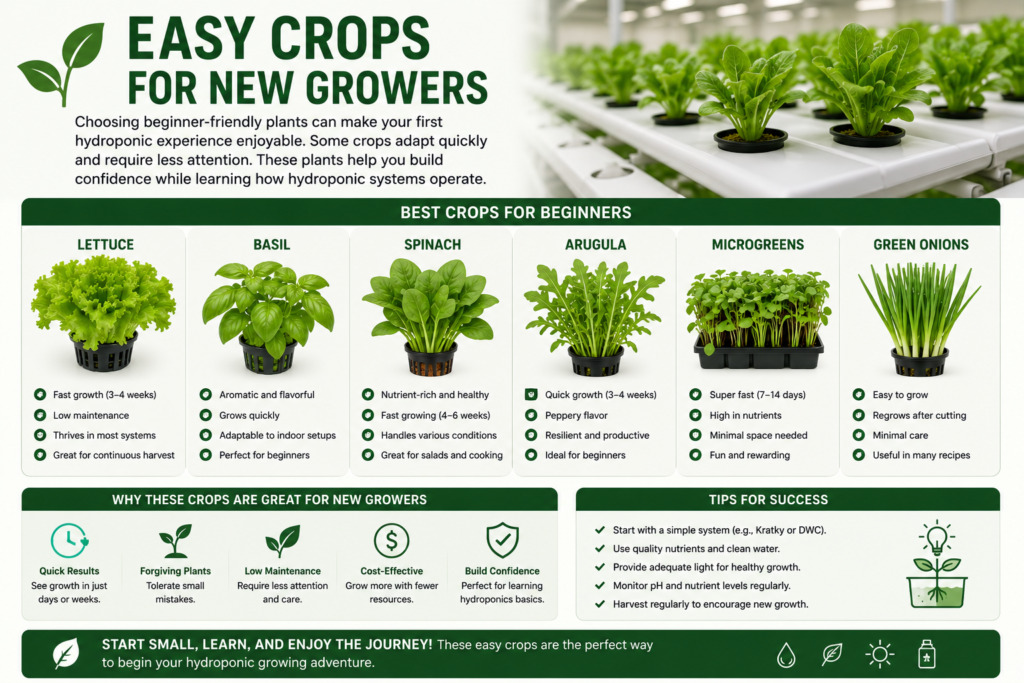
Easy Crops for New Growers
Choosing beginner-friendly plants can make your first hydroponic experience enjoyable. Some crops adapt quickly and require less attention. These plants help you build confidence while learning how hydroponic systems operate.
Lettuce is one of the easiest crops to grow. It grows quickly, responds well to hydroponic conditions, and does not require much space. Many beginners harvest fresh lettuce within a few weeks.
Herbs are another excellent choice. Basil, mint, parsley, and cilantro thrive in hydroponic systems. These herbs grow rapidly and provide a steady supply for your kitchen.
Spinach and kale are also beginner-friendly options. They tolerate a range of conditions and often produce reliable harvests. Their compact growth habit makes them suitable for smaller setups.
Plants to Try After Gaining Experience
Once you feel comfortable, you can experiment with larger crops. Tomatoes, peppers, and cucumbers are popular hydroponic choices. These plants often require stronger lighting and additional support structures.
Strawberries are another exciting option. Many growers enjoy producing fresh berries indoors throughout the year. Although slightly more demanding, they can be very rewarding.
Starting with easy crops allows you to learn essential skills before moving to more challenging plants.
Maintenance Made Simple
Hydroponic maintenance does not need to be difficult. Small daily checks can prevent bigger problems later. A few minutes each day can help keep your system running smoothly.
Begin by checking water levels regularly. Plants consume water as they grow, so maintaining proper levels is important. Refill the reservoir when necessary to keep roots healthy.
Monitor nutrient levels according to your system’s recommendations. Plants need balanced nutrition for strong growth. Too many nutrients can cause problems, while too few can slow development.
Simple Habits for Long-Term Success
Keep your equipment clean to reduce the risk of disease. Regular cleaning helps maintain water quality and supports healthy root development.
Inspect roots whenever possible. Healthy roots are typically light-colored and firm. Dark or slimy roots may indicate a problem that needs attention.
Check pumps, tubing, and air stones periodically. These components play a critical role in system performance. Catching small issues early can save time and effort later.
Finally, observe your plants closely. They often show signs when something needs adjustment. Healthy leaves, steady growth, and strong roots usually indicate that your hydroponic system is working properly.
As you continue learning, hydroponics becomes less intimidating and more enjoyable. With the right setup, beginner-friendly crops, and simple maintenance habits, you can build a successful growing system. This Beginner’s Guide to Hydroponic Technology Systems for Faster Growth shows that anyone can start growing fresh plants with confidence.