How Recirculating Systems Work
Saving Water With Hydroponic Technology Systems becomes easier through the use of recirculating water systems, one of the most important features of modern hydroponic farming.Instead of letting water drain away, these systems collect, filter, and reuse it. Nutrient-rich water flows directly to the plant roots, providing everything the plants need for healthy growth. After the roots absorb nutrients and moisture, the remaining solution returns to a storage reservoir, where it is ready to circulate again.
This continuous recycling process is the key to Saving Water With Hydroponic Technology Systems. Because the same water is reused many times, growers do not need to keep adding fresh water. In traditional soil gardening, a large amount of water is lost through evaporation, runoff, and deep soil absorption. Hydroponic systems prevent many of these losses by keeping water inside a controlled growing environment.
You can think of a recirculating hydroponic system as a smart water recycling loop. Water travels exactly where it is needed, nourishes the roots, and then flows back into the reservoir for another cycle. This efficient design reduces waste while giving growers complete control over nutrient levels, water quality, and moisture.
Many popular hydroponic methods rely on recirculation. Nutrient Film Technique (NFT) systems continuously move nutrient solution through narrow channels. Deep Water Culture (DWC) systems often recycle water between connected reservoirs to maintain stable growing conditions. Large commercial hydroponic farms also use recirculating systems because they improve efficiency and reduce operating costs.
The controlled movement of water supports consistent plant growth. Since roots always have access to nutrients and oxygen, plants spend less energy searching for resources. This leads to stronger growth, healthier crops, and higher yields. Saving Water With Hydroponic Technology Systems not only conserves one of our most valuable natural resources but also makes indoor and commercial farming more sustainable for the future.
Why Water Conservation Matters
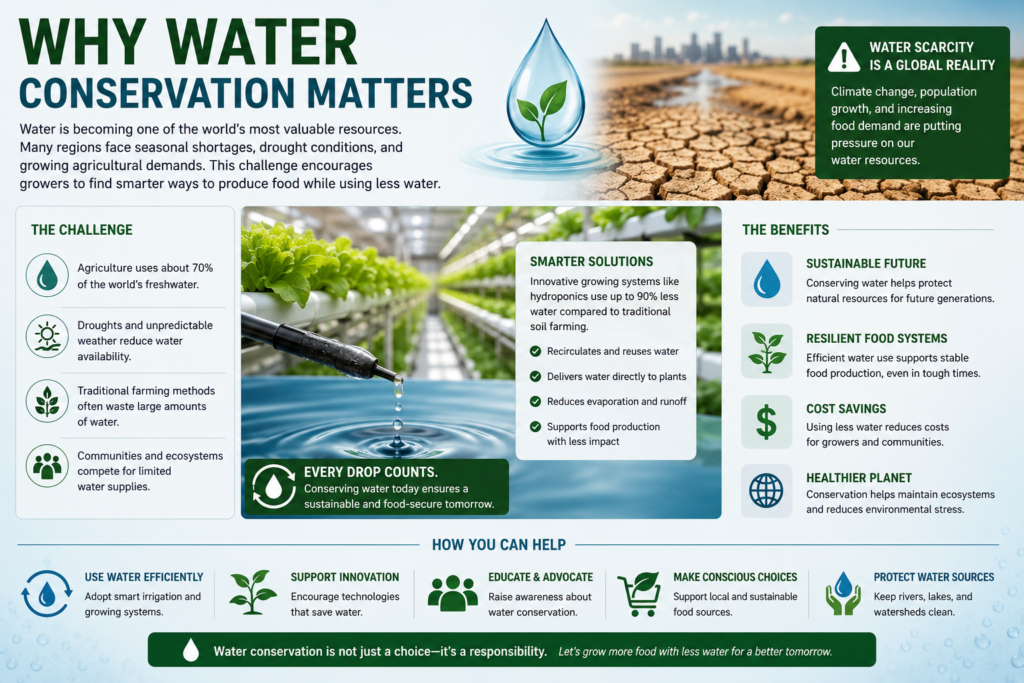
Water is becoming one of the world’s most valuable resources. Many regions face seasonal shortages, drought conditions, and growing agricultural demands. This challenge encourages growers to find smarter ways to produce food while using less water.
Saving Water With Hydroponic Technology Systems offers an effective solution. These systems can use significantly less water than conventional farming methods. Since water remains inside a closed loop, losses from evaporation and runoff are greatly reduced.
When you grow plants in soil, a large amount of water never reaches the roots. Some water evaporates from the soil surface. Some drains away before plants can absorb it. Hydroponic systems minimize these problems by delivering water directly where it is needed.
Water conservation also means lower operating costs. You spend less money replacing water throughout the growing season. This benefit becomes even more important in areas where water supplies are limited or expensive.
Another advantage is environmental protection. Reduced water consumption places less pressure on local water sources. Rivers, lakes, and groundwater reserves benefit when agriculture uses resources more efficiently. Small improvements across many growing systems can create a meaningful impact over time.
For home growers, water savings can be surprisingly noticeable. Even a small hydroponic setup can produce healthy crops while using less water than traditional gardening methods. This makes hydroponics appealing for people who want sustainable food production without excessive resource use.
Measuring System Efficiency
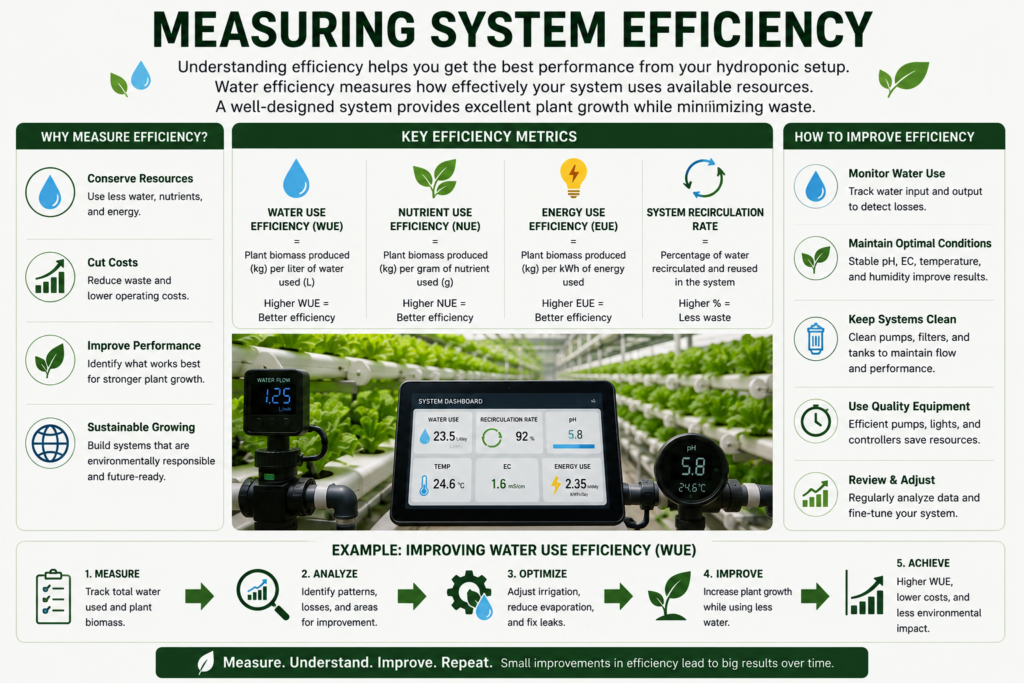
Understanding efficiency helps you get the best performance from your hydroponic setup. Water efficiency measures how effectively your system uses available resources. A well-designed system provides excellent plant growth while minimizing waste.
One simple way to measure efficiency is by monitoring water consumption. Keep track of how much water you add over several weeks. Compare this amount with the quantity of crops produced. This information helps you understand how efficiently your system operates.
You can also observe nutrient usage and plant health. Healthy plants often indicate that water and nutrients are being delivered correctly. If plants struggle despite regular maintenance, adjustments may improve overall performance.
Technology makes monitoring easier than ever. Modern sensors can measure water levels, nutrient concentrations, and flow rates automatically. These tools provide valuable data that helps you optimize growing conditions. Even basic monitoring practices can reveal opportunities for improvement.
Regular inspections also contribute to better efficiency. Checking pumps, tubing, and reservoirs helps identify leaks or blockages early. Small issues can lead to unnecessary water loss if left unresolved. Routine maintenance keeps everything running smoothly and supports long-term water savings.
As you gather more data, you can make informed decisions. Small adjustments often produce noticeable improvements. Over time, these refinements help create a highly efficient growing environment.
Sustainability Success Stories
Across the world, growers are proving that hydroponics can support sustainable food production. Many farms have adopted water-saving technologies to address environmental challenges and improve efficiency. Their success demonstrates the potential of modern hydroponic systems.
Urban farms provide some of the most impressive examples. These operations often grow fresh vegetables in limited spaces while using significantly less water. By combining hydroponics with controlled environments, they produce crops throughout the year.
Commercial greenhouse operators have also embraced water conservation practices. Many facilities collect and recycle nutrient solutions instead of discarding them. This approach reduces waste and lowers resource consumption without sacrificing productivity.
Educational institutions are using hydroponic systems to teach sustainability concepts. Students learn how efficient water management supports food production and environmental responsibility. These programs inspire future growers to adopt smarter agricultural practices.
Home gardeners share their own success stories as well. Many discover they can grow herbs, lettuce, and vegetables while using surprisingly little water. These experiences encourage more people to explore sustainable growing methods.
The growing popularity of Saving Water With Hydroponic Technology Systems highlights a broader shift toward responsible agriculture. As technology continues to improve, water-efficient growing methods will likely become even more effective. Whether you manage a large farm or a small indoor garden, hydroponics offers practical ways to conserve resources while producing healthy crops.